Chimney Repair in Philadelphia: A Homeowner’s Guide
Most Philadelphia chimney problems come down to water and weather: failed mortar joints, a cracked crown, spalling brick, rusted or missing flashing, and a worn-out cap. Catching these early usually means a repair, like repointing the joints or rebuilding the crown, in the low thousands. Ignoring them lets water work into the structure until you’re facing a partial or full rebuild. Because chimneys are exposed on every side and sit above the roofline, they often need attention before the rest of the house does. This guide covers what to watch for and what each fix involves.
Why Chimneys Fail First in Philadelphia
A chimney takes weather from all four sides and the top, with no neighboring wall to shelter it. Combine that with Philadelphia’s freeze-thaw winters and you get accelerated mortar erosion, cracking, and spalling. On the tight rooflines of Center City and Delaware County rowhomes, chimneys also tie into flashing and party walls, so a small leak can travel. Our full chimney services page has more.
Common Chimney Repairs and What They Involve
- Repointing the joints. Removing failed mortar and repacking the joints, the most common chimney repair. Closely related to whole-house repointing.
- Rebuilding the crown. The concrete cap at the very top sheds water away from the flue. When it cracks, water pours straight into the structure.
- Replacing spalled brick. Flaking, crumbling brick faces need swapping out, which ties into brickwork.
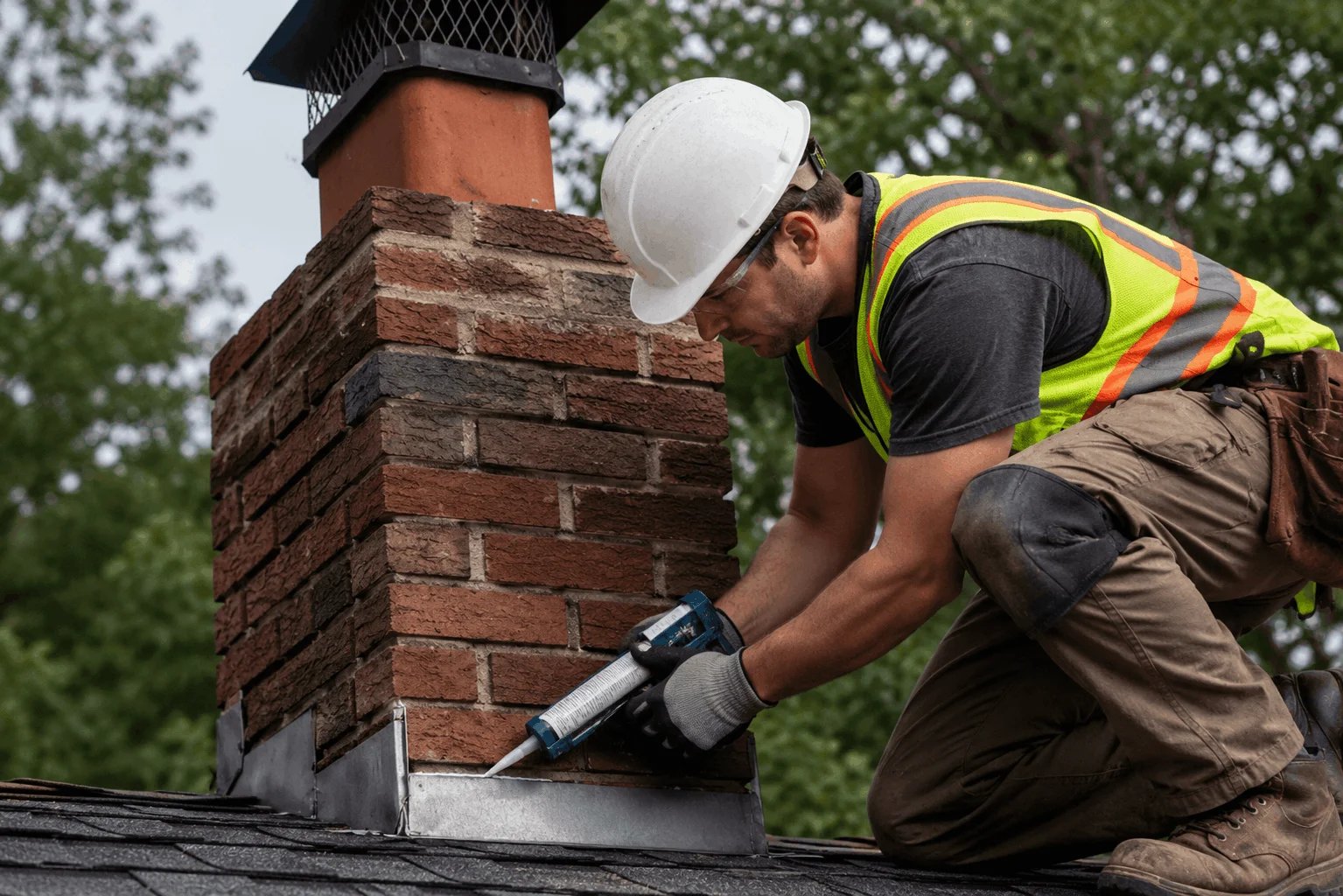
- Flashing repair. The metal seal where the chimney meets the roof. Rusted or lifted flashing is a frequent leak source.
- Cap and waterproofing. A proper cap keeps rain and animals out of the flue; a breathable sealant helps shed water off the brick.
- Partial or full rebuild. When deterioration reaches the structure, the top section or the whole chimney is rebuilt course by course.
Realistic Cost Ranges
- Repointing or crown repair: often $1,000-$4,000 depending on size and access.
- Brick replacement and flashing work: commonly $1,500-$5,000.
- Partial rebuild (top courses): frequently $3,000-$8,000.
- Full rebuild: typically $6,000-$15,000+ depending on height and roof access.
These are realistic ranges, not quotes. Chimney work hinges on access and how far damage has gone, so every job starts with a free on-site estimate.
Warning Signs You Shouldn’t Ignore
- White efflorescence staining or damp on the chimney or the ceiling around it
- Crumbling mortar joints you can scrape out
- Flaking or spalling brick faces
- Cracks in the crown or visible gaps at the flashing
- Pieces of brick or mortar showing up in the yard or on the roof
How to Protect Your Chimney
- Have it inspected periodically, especially after hard winters.
- Keep the cap and crown sound so water doesn’t enter from the top.
- Address failed mortar early before water reaches the structure.
- Consider breathable waterproofing on the brick to slow weathering.
With more than 6,000 projects completed across Greater Philadelphia since 1974, we’ve repaired and rebuilt chimneys on everything from Rittenhouse Square homes to Main Line and Delaware County properties. Every job starts with a free on-site estimate so you know exactly what your chimney needs. See examples on our gallery.
Frequently Asked Questions
What is the most common chimney repair in Philadelphia?
Repointing the mortar joints. Chimneys are exposed on all sides and above the roofline, so their joints erode faster than the rest of the house in our freeze-thaw climate.
How much does chimney repair cost?
Repointing or crown repairs often run $1,000-$4,000, while partial rebuilds run $3,000-$8,000 and full rebuilds $6,000 and up. Access and the extent of damage drive the number, so every job starts with a free on-site estimate.
How do I know if I need a repair or a full rebuild?
If damage is limited to joints, the crown, or a few brick faces, it’s a repair. Once deterioration reaches the structure or the chimney leans or sheds brick, a partial or full rebuild is usually needed. An inspection tells you which.
What causes most chimney leaks?
Water entry through failed mortar, a cracked crown, spalled brick, or rusted flashing where the chimney meets the roof. Keeping the cap, crown, and joints sound is the best prevention.
Get a free masonry estimate in Philadelphia
Natalini & Son Masonry has been family-owned and operated since 1974 — 50+ years and 6,000+ projects across Center City and Greater Philadelphia. Every job starts with a free, no-pressure on-site estimate.