How to Waterproof a Brick Chimney in Philadelphia
Waterproofing a brick chimney in Philadelphia is a two-part job: first repair every active water source, then apply a breathable masonry sealer that repels rain while still letting trapped moisture escape. The order matters. Sealing a chimney that has failed joints, a cracked crown, or rusted flashing just traps water inside and accelerates damage. Done correctly and in the right sequence, waterproofing meaningfully slows the freeze-thaw weathering that wears chimneys down in our climate. Here’s how it should be done.
Why Waterproof a Chimney at All
A chimney is exposed on all sides above the roofline and takes the full force of Philadelphia’s rain, snow, and freeze-thaw winters. Brick is porous, so it drinks in water, which then freezes, expands, and spalls the faces or erodes the joints. A proper breathable sealer reduces how much water the sound brick absorbs, which slows spalling and extends the life of your mortar joints. It’s a preventive step for chimneys that are already in good repair, not a cure for ones that are leaking.
Step One: Repair Before You Seal
Sealing over existing damage is the most common waterproofing mistake. Before any sealer goes on, these need to be addressed:
- Failed mortar joints should be repointed so water isn’t entering through the gaps. This is core repointing work.
- Spalled brick must be replaced, since you can’t waterproof a brick whose face has already flaked off. That’s brickwork.
- A cracked crown needs repair or rebuilding so water stops entering from the top.
- Rusted or lifted flashing at the roofline must be fixed so water isn’t getting in behind it.
Our chimney services cover all of this, because waterproofing only works on a sound chimney.
Step Two: Use a Breathable Sealer (Not Paint or Film)
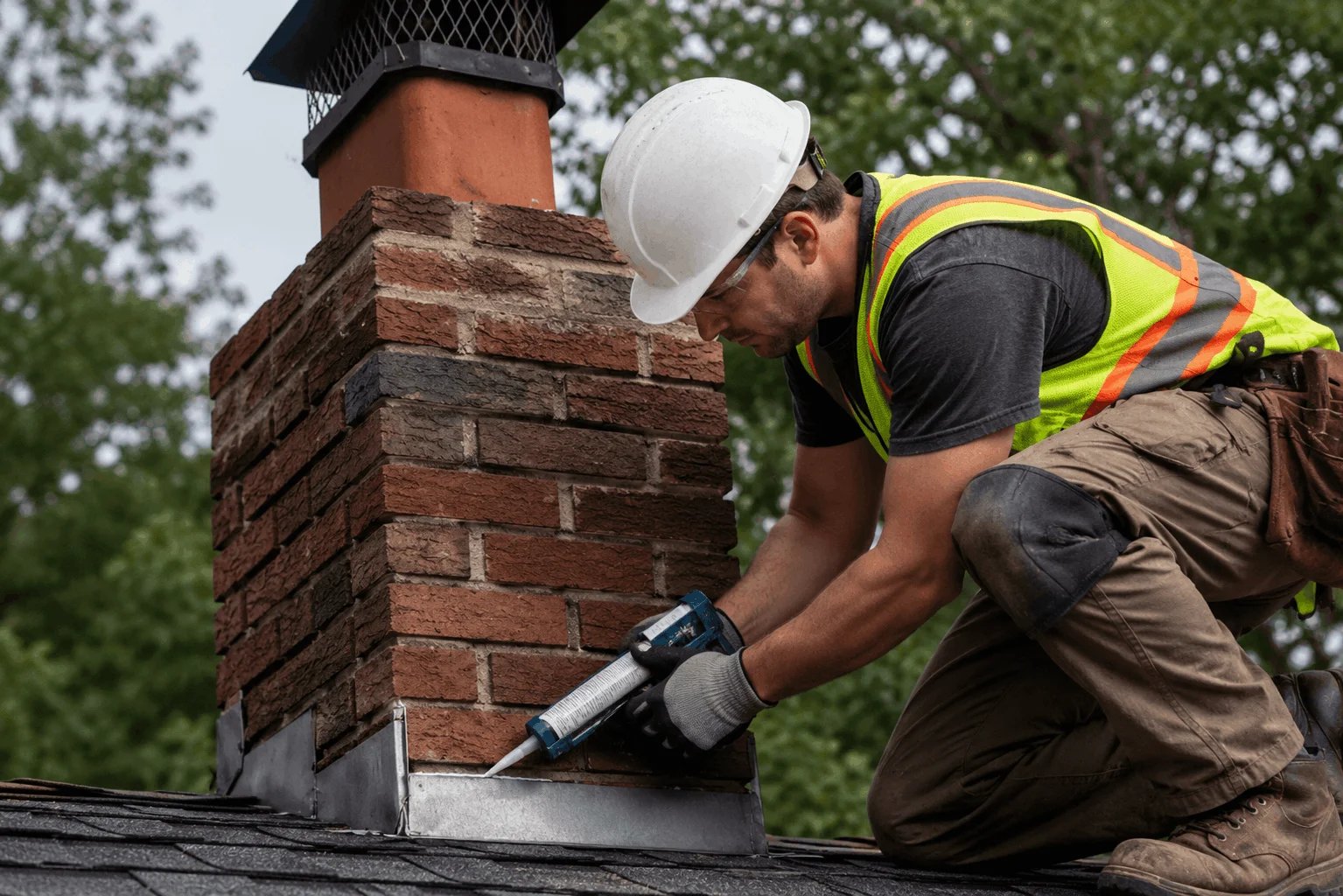
The single most important rule is to use a vapor-permeable, breathable masonry water repellent, typically a siloxane- or silane-based product. These soak into the brick and repel liquid water from outside while still letting water vapor escape from inside. What you must avoid is any film-forming product:
- Don’t use paint, elastomeric coatings, or sealers that form a surface film. They trap moisture inside the brick, and in a freeze-thaw climate that trapped water spalls the brick from behind.
- Don’t seal damp brick. The masonry should be dry so the repellent penetrates and isn’t locking moisture in.
- Don’t treat it as permanent. Breathable repellents wear over years and are reapplied periodically.
Other Defenses That Keep Water Out
- A proper chimney cap keeps rain and snow out of the flue from the top.
- A sound crown sheds water away from the brick.
- Good flashing seals the roof junction.
- Maintained joints remain your first line of defense; waterproofing supplements them, it doesn’t replace them.
Should You DIY It?
The sealer itself isn’t complicated, but the parts that actually matter, accurately judging whether your joints, crown, and flashing are sound, and doing that work safely on a roofline, are not DIY-friendly. Sealing over hidden damage is worse than doing nothing. A mason can tell you whether your chimney is a candidate for waterproofing or needs repairs first.
Since 1974 we’ve waterproofed and repaired chimneys across Center City, the Main Line, and Delaware County, always inspecting and fixing before sealing. Every job starts with a free on-site estimate. See examples on our gallery.
Frequently Asked Questions
How do you waterproof a brick chimney correctly?
First repair every water source, failed joints, spalled brick, a cracked crown, and rusted flashing, then apply a breathable, penetrating masonry repellent that keeps rain out while letting trapped moisture escape.
Can I just seal my chimney to stop leaks?
No. Sealing a leaking chimney traps water inside and makes spalling worse. Sealer is a preventive step for chimneys that are already in sound repair, not a fix for active damage.
What kind of sealer should be used on chimney brick?
A vapor-permeable, breathable water repellent, usually siloxane- or silane-based. Avoid paint, elastomeric coatings, or any film-forming product, which traps moisture and causes the brick to spall from behind.
How often does chimney waterproofing need redoing?
Breathable repellents wear over several years and are reapplied periodically. They supplement sound mortar joints and a good crown and cap rather than replacing the need to maintain them.
Get a free masonry estimate in Philadelphia
Natalini & Son Masonry has been family-owned and operated since 1974 — 50+ years and 6,000+ projects across Center City and Greater Philadelphia. Every job starts with a free, no-pressure on-site estimate.