Caring for a 19th-Century Brownstone in Center City
Caring for a 19th-century brownstone comes down to one principle: control water and use compatible materials. Brownstone is a soft, layered sandstone that spalls and delaminates when moisture, freeze-thaw cycles, and incompatible repairs work against it. For the historic brownstones throughout Center City Philadelphia, the right care, careful repointing, breathable repairs, and good drainage, can preserve the facade for generations. The wrong care, hard cement and sealers that trap moisture, accelerates the damage.
Why Brownstone Is Different From Brick
Brownstone isn’t brick. It’s a sedimentary sandstone, prized in the 1800s for its rich color and how easily it could be carved into ornate window heads, cornices, and stoops. But that same softness makes it vulnerable. The stone was often set with its natural layers facing outward (called “face bedding”), which causes it to peel away in sheets over time, a problem you’ll see on rowhouse facades across Center City.
Common Brownstone Problems
- Spalling and delamination the surface flaking or peeling off in layers.
- Sugaring the stone breaking down into loose, sandy grains.
- Open mortar joints letting water into and behind the stone.
- Failed past repairs hard cement patches that trap moisture and worsen spalling.
- Cracked or eroded carved details on cornices, lintels, and stoops.
The Cardinal Rule: Manage Water
Almost every brownstone failure traces back to water. It enters through open joints, cracked stone, and failing flashing, then freezes and expands in Philadelphia’s winters. Caring for a brownstone means keeping that water out:
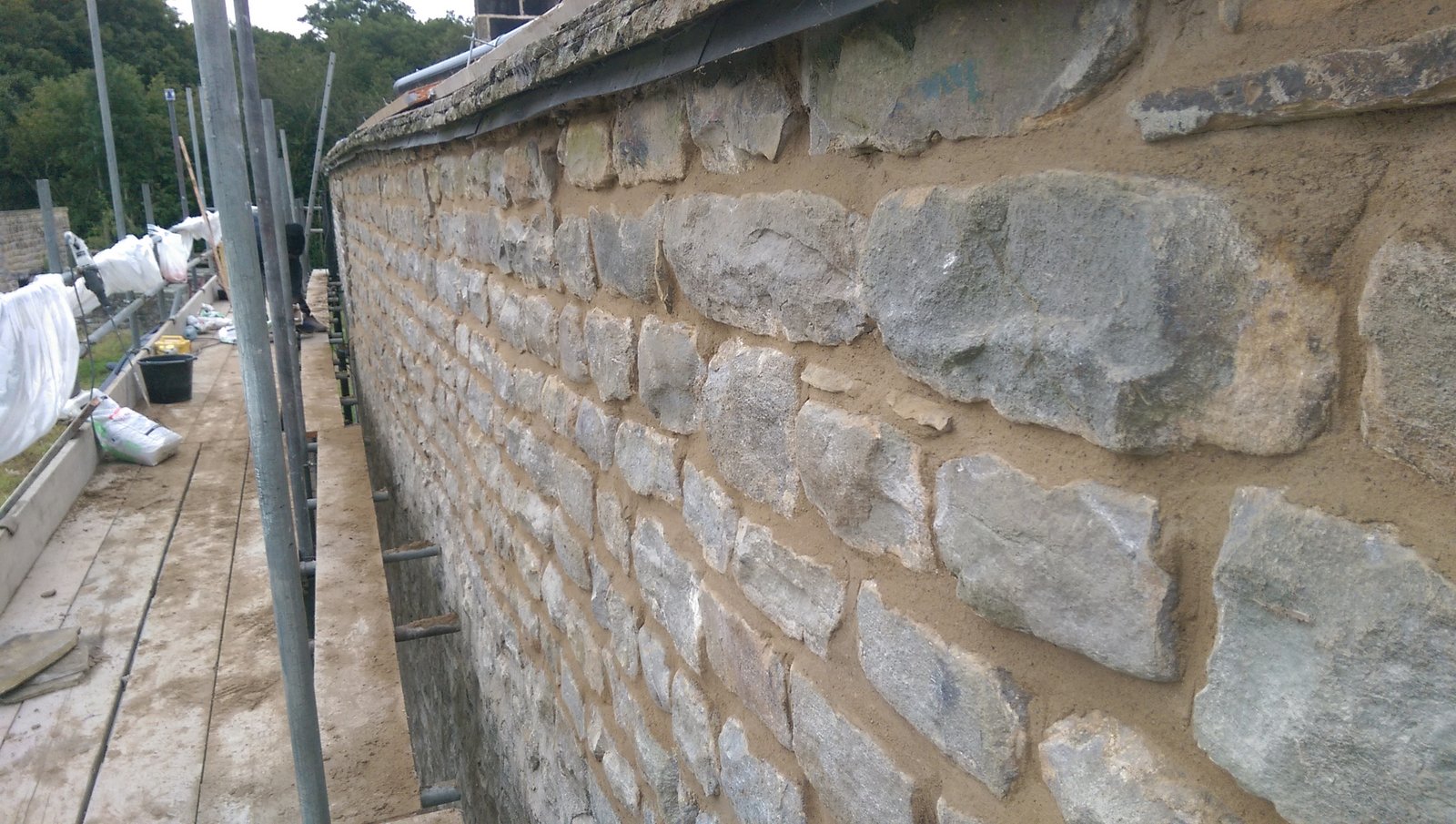
- Keep mortar joints sound with proper repointing using a soft, breathable lime-based mix.
- Repair cracks and open seams before winter.
- Maintain gutters, downspouts, and flashing so water sheds away from the stone.
- Avoid film-forming sealers that trap moisture inside the stone, the most common cause of accelerated spalling.
Why Compatible Materials Matter So Much
Brownstone is soft and breathable, and any repair has to behave the same way. Hard Portland cement is the classic mistake: it’s stronger than the stone, so it traps moisture and forces the brownstone behind and around it to crumble instead. Proper restoration uses soft, breathable mortars and patching materials matched to the original stone’s color and texture, often a cementitious composite tinted to blend with the surrounding facade. This is detailed, slow work, and it’s where experience makes the difference between a repair that lasts decades and one that fails in a few winters.
Repair, Don’t Replace, When You Can
Sound restoration favors saving original material. A skilled mason can:
- Dutchman repairs, splicing in matched stone where sections are lost.
- Build up and recarve composite patches to restore eroded detail.
- Repoint with compatible mortar to seal the wall.
- Rebuild deteriorated stoops and steps to match the original.
This kind of careful work keeps a Center City brownstone authentic and structurally sound. You can see restoration projects in our gallery, and learn about our family’s approach on our about page.
A Maintenance Mindset
Brownstones reward attention and punish neglect. A modest yearly walk-around, checking joints, looking for new spalling, clearing gutters, catches small problems before they become facade-wide failures. We’ve worked on historic masonry throughout Center City and Greater Philadelphia for more than 50 years, and the brownstones that survive are the ones whose owners stay ahead of the water.
Frequently Asked Questions
Why does brownstone spall and peel?
Brownstone is a soft, layered sandstone. When it’s set with its natural layers facing outward and water gets into it and freezes, the surface peels away in sheets (delamination). Trapped moisture from hard cement repairs or film-forming sealers makes this much worse.
Can you use regular cement to repair a brownstone?
No. Hard Portland cement is stronger and less breathable than brownstone, so it traps moisture and forces the surrounding stone to crumble. Restoration requires soft, breathable lime-based mortars and patching materials matched to the stone’s color and texture.
Is it better to repair or replace damaged brownstone?
Repair is usually better when the stone is salvageable. Skilled masons use Dutchman repairs, composite patching, and recarving to restore eroded detail while keeping original material. Full replacement is reserved for sections that are too far gone.
How do I maintain a Center City brownstone?
Keep water out. Repoint open joints with compatible mortar, repair cracks before winter, maintain gutters and flashing, and avoid sealers that trap moisture. A yearly walk-around to catch new spalling early prevents small issues from becoming facade-wide failures.
Get a free masonry estimate in Philadelphia
Natalini & Son Masonry has been family-owned and operated since 1974 — 50+ years and 6,000+ projects across Center City and Greater Philadelphia. Every job starts with a free, no-pressure on-site estimate.