Waterproofing Historic Brick Façades in Center City
Waterproofing a historic brick facade in Center City Philadelphia means stopping water from getting behind the brick while still letting the wall breathe. The right approach combines sound repointing, a vapor-permeable (breathable) sealer, and proper flashing and drainage. The wrong approach, like coating old brick with a non-breathable acrylic or elastomeric paint, traps moisture inside the wall and causes spalling, efflorescence, and freeze-thaw damage. For 19th-century rowhomes and commercial blocks around Rittenhouse Square, Washington Square West, and Old City, breathability is not optional.
Why Center City brick facades fail at the water line
Most of Philadelphia’s historic brick was made from soft, locally fired clay and laid with soft lime mortar. That assembly was designed to absorb a little water and release it back out. When water gets trapped, usually because of failed mortar joints, the wrong sealer, or a cracked cornice, it freezes in winter, expands, and pops the face off the brick. Once a brick spalls, the exposed inner clay soaks up water even faster, and the damage accelerates.
Common entry points we find on Center City facades include:
- Eroded or cracked mortar joints, especially on south- and west-facing walls that take wind-driven rain
- Failed sealant and flashing at parapets, cornices, and window heads
- Rusting steel lintels that expand and crack the brick above windows
- Downspouts and gutters dumping water against the base of the wall
- Previous repairs done with hard Portland cement that traps moisture in soft brick
The right way to waterproof historic brick
Effective waterproofing is a system, not a single coat. The sequence matters.
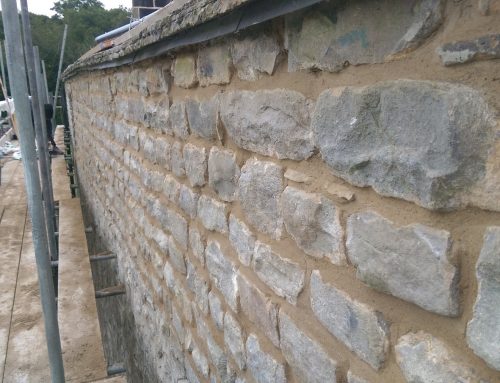
- Fix the mortar first. Most leaks are joint leaks. Sound, properly matched mortar joints do more for water resistance than any sealer. Our repointing work uses a mortar matched to the original in strength, color, and profile.
- Repair spalled and cracked brick. Replace badly damaged units with salvaged or matching brick before sealing. Our brickwork crews handle cutting, toothing-in, and color matching so repairs disappear into the wall.
- Address flashing and the roofline. Parapets, cornices, and chimneys are the most common source of slow leaks. Step flashing and counterflashing have to shed water away from the masonry.
- Apply a breathable water repellent. A penetrating, vapor-permeable siloxane or silane repellent sheds liquid water while letting water vapor escape. Never use a film-forming coating on historic brick.
Breathable repellents vs. film-forming sealers
This is the single most important decision on a historic facade. A penetrating repellent soaks into the masonry and works below the surface, so the brick still looks like brick and can still dry out. A film-forming sealer or waterproof paint sits on top, blocks vapor, and traps any water that gets in from a roof leak or rising damp. On a soft Philadelphia rowhome, that trapped water is what destroys the wall.
What it costs and when to do it
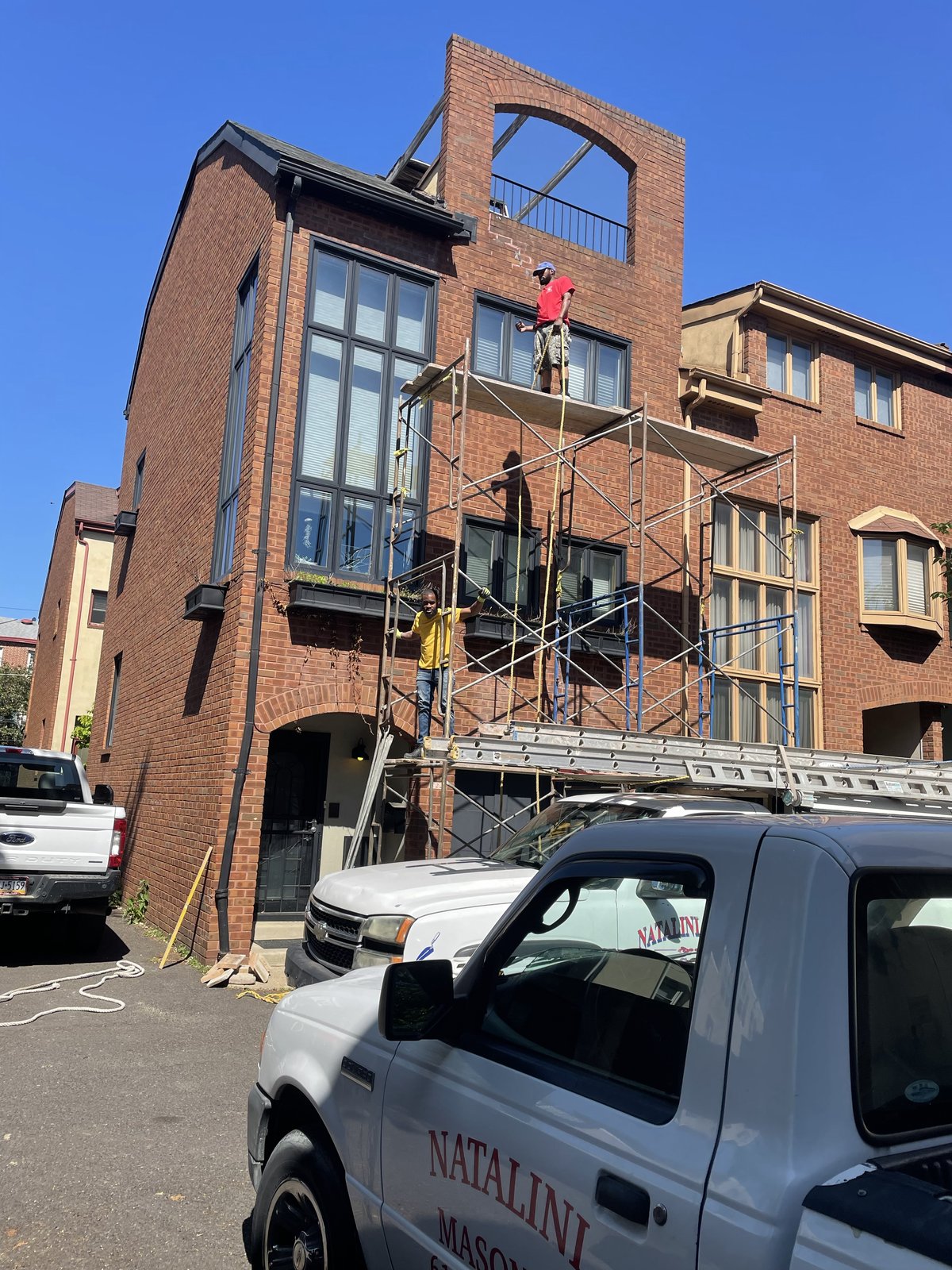
Pricing depends on wall height, access (scaffold vs. lift), the amount of repointing and brick replacement needed, and the repellent specified. Small rowhome facades land at the lower end; tall Center City commercial walls with extensive restoration run considerably higher. We never quote sight-unseen, because the condition of the mortar and lintels drives the number. Every job starts with a free on-site estimate. The best time to waterproof is late spring through early fall, when temperatures stay above the minimums repellents and mortar need to cure. You can see examples of completed facade restoration in our project gallery.
Mistakes to avoid on a Center City facade
We get called in to undo a lot of well-intentioned but damaging work. The most common errors on historic Philadelphia brick are worth naming so you can avoid them:
- Power washing at high pressure. Aggressive pressure washing strips the hard fired skin off soft brick and blasts mortar out of the joints, leaving the wall more absorbent than before. Gentle, low-pressure cleaning is the right approach.
- Sealing a wet wall. Trapping existing moisture under a repellent guarantees problems. The wall has to be dry and the joints sound before anything goes on.
- Skipping the roofline. A flawless wall still leaks if the parapet, cornice, or chimney above it is shedding water into the masonry. Waterproofing always starts at the top.
- Using brick-colored caulk to fill cracks. Caulk traps water and fails fast. Cracks belong to repointing and brick replacement, not a tube of sealant.
Getting the sequence and the materials right the first time is what separates a repair that lasts twenty years from one that fails in two. That’s the standard we hold on every Center City facade we touch.
Frequently Asked Questions
Can you waterproof historic brick without changing how it looks?
Yes. A penetrating, breathable repellent soaks into the masonry and leaves no film or sheen, so the brick still looks like natural brick. We avoid film-forming paints and coatings on historic facades because they trap moisture.
Why shouldn’t I just paint or seal my old brick?
Most waterproof paints and elastomeric coatings block water vapor. On soft Philadelphia brick that traps moisture inside the wall, leading to spalling and freeze-thaw damage. Breathable penetrating repellents are the safe choice.
Does waterproofing replace the need for repointing?
No. Sound mortar joints are the foundation of a watertight wall. We repoint failed joints first, then apply a repellent. A sealer over crumbling mortar will not keep water out.
What’s the best time of year to waterproof brick in Philadelphia?
Late spring through early fall, when temperatures stay above the minimums mortar and repellents need to cure properly. We can inspect any time of year.
Get a free masonry estimate in Philadelphia
Natalini & Son Masonry has been family-owned and operated since 1974 — 50+ years and 6,000+ projects across Center City and Greater Philadelphia. Every job starts with a free, no-pressure on-site estimate.