Chimney Repair for Logan Square Rowhomes and High-Rises
Chimney repair for Logan Square rowhomes and high-rises in Philadelphia usually involves repointing the masonry, repairing or rebuilding the crown, replacing flashing, and addressing spalled brick or a deteriorated liner. Chimneys take more weather abuse than any other part of a building because they’re fully exposed on all sides and at the highest point. In Logan Square, where you’ll find everything from 19th-century rowhomes to mid-rise and high-rise buildings, the right fix depends on the structure, but the warning signs and the urgency are the same: water and freeze-thaw are working on your chimney every winter.
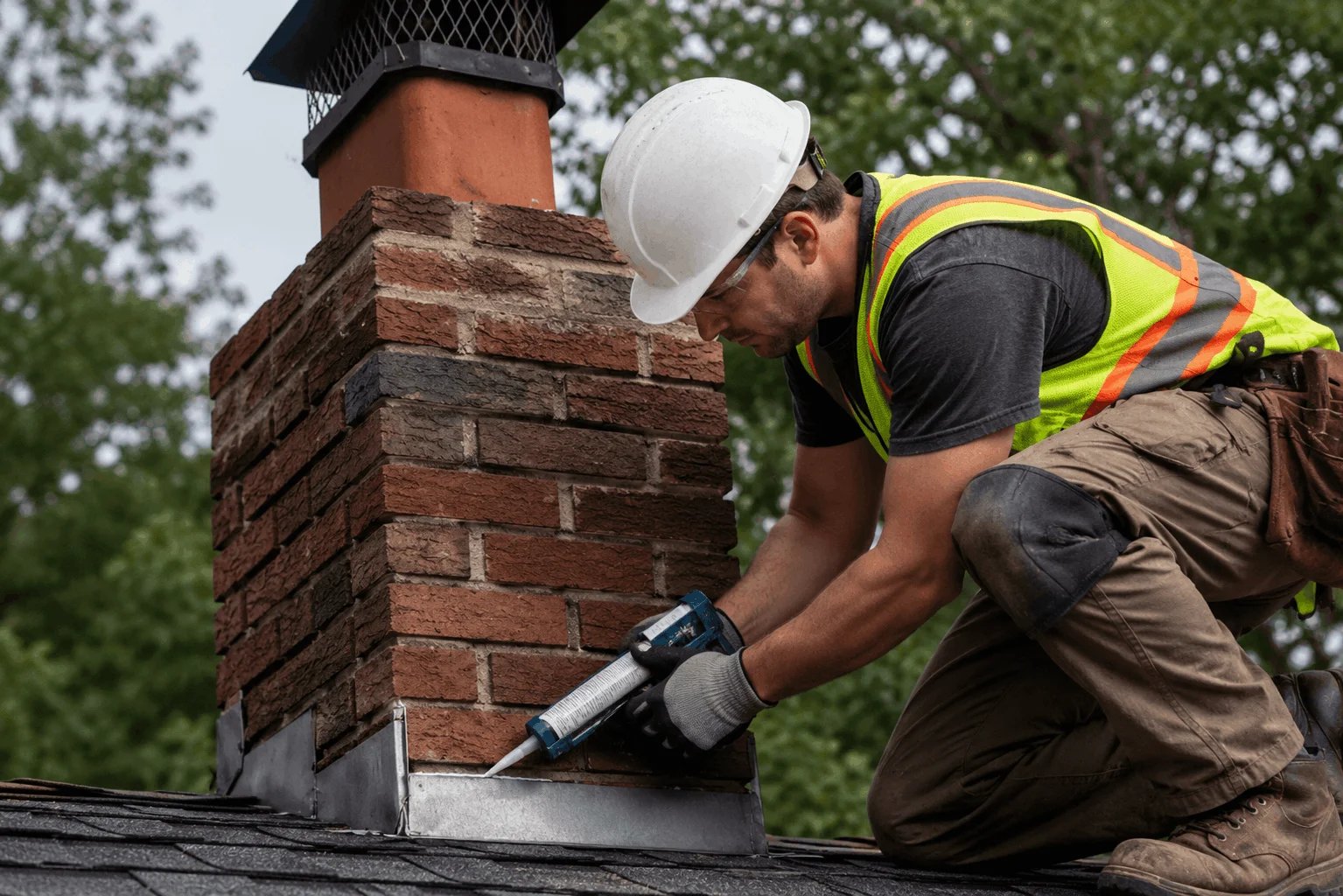
Signs your chimney needs repair
- Crumbling or missing mortar joints in the chimney masonry
- Spalled, cracked, or loose bricks, sometimes found on the roof or ground
- A cracked or crumbling chimney crown (the concrete cap on top)
- Rusted, lifted, or missing flashing where the chimney meets the roof
- White efflorescence staining on the chimney or interior walls
- Water in the firebox, a damp chimney chase, or stains on ceilings near the chimney
- A leaning or visibly bowed chimney stack
A leaning chimney or large pieces of falling masonry are safety issues, especially on a tall building over a Logan Square sidewalk, and should be looked at right away.
What chimney repair includes
- Repointing. Eroded joints are raked out and repacked with matched mortar so water stops getting into the stack. This is the most common chimney repair. See our repointing services.
- Crown repair or replacement. The crown sheds water off the top of the chimney. A cracked crown lets water straight into the masonry, so we repair or rebuild it with a proper overhang and drip edge.
- Flashing. The flashing seal between chimney and roof is a leading source of leaks. We repair or replace it so water sheds away from the masonry.
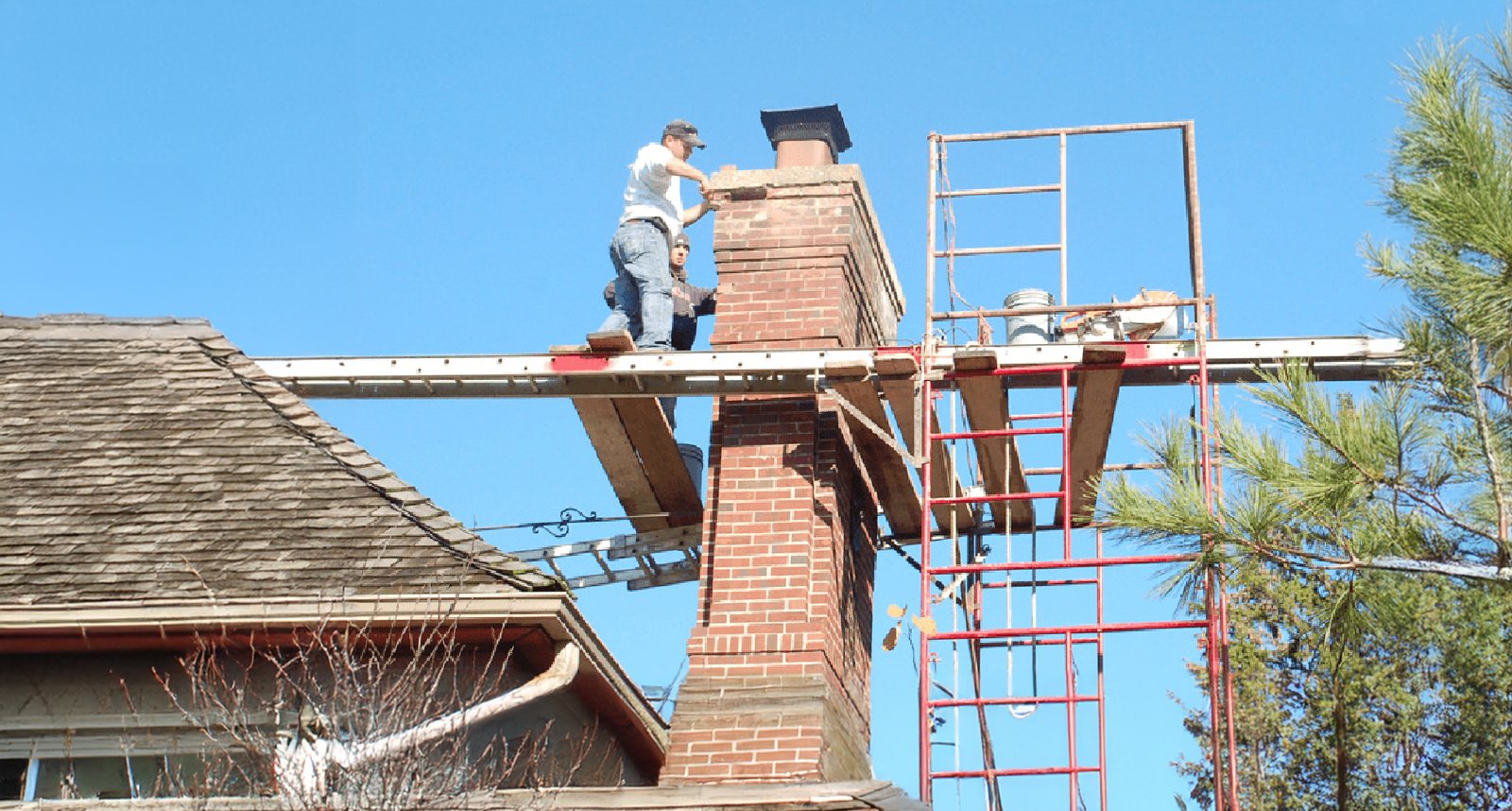
- Brick replacement and rebuilds. Spalled brick is replaced; chimneys that are too far gone are partially or fully rebuilt above the roofline. Our chimney crews and brickwork crews handle both.
Rowhomes vs. high-rises
On a Logan Square rowhome, chimney work is usually accessible from a ladder or modest scaffold, and the common issues are crown cracks, flashing leaks, and repointing. On a mid-rise or high-rise, chimney and chase masonry repair involves height access, swing-stage or lift equipment, and coordination with building management, but the underlying masonry problems, water entry through failed joints and crowns, are the same. We’re licensed, insured, and equipped for both.
Why prompt repair pays off
A small crack in a crown or a few open joints lets water into the chimney, where it freezes, expands, and accelerates the damage every winter. What starts as a repointing job can become a full rebuild if it’s left for a few seasons. A sound chimney also protects the rest of the building. The water that gets past a bad crown or flashing ends up in your ceilings and walls. Tackling it early is far cheaper. If you’re focused on your block, see our page on chimney repair in Logan Square, and view finished chimney work in our gallery.
What chimney repair costs
Cost depends on the type of repair, the height and access, and the extent of the damage. Repointing and crown repair on an accessible rowhome chimney are modest; a high-rise chimney requiring lift access or a full rebuild is a larger project. We never quote sight-unseen, because access and condition drive the number. Every job starts with a free on-site estimate.
Repointing vs. partial rebuild vs. full rebuild
Not every chimney needs the same fix, and an honest mason will tell you which level of repair your chimney actually needs rather than overselling a rebuild:
- Repointing handles chimneys where the brick is sound but the mortar joints have eroded. It’s the most common and most affordable chimney repair.
- Crown and flashing repair addresses the two most frequent leak points and often accompanies repointing.
- Partial rebuild is needed when the masonry above the roofline has deteriorated but the structure below is solid. We take the stack down to sound brick and rebuild from there.
- Full rebuild is reserved for chimneys that are leaning, badly spalled throughout, or structurally compromised top to bottom.
The earlier we see a chimney, the more likely it stays in the repointing or crown-repair category instead of becoming a rebuild. That’s the whole argument for not waiting.
Don’t forget the cap and liner
A chimney cap keeps rain, animals, and debris out of the flue, and it’s an inexpensive addition that prevents a surprising amount of water damage. If your chimney is used for a fireplace or heating appliance, the condition of the liner matters too. During a chimney inspection we’ll flag cap and liner issues alongside the masonry so you get the full picture.
Frequently Asked Questions
How do I know if my chimney needs repair?
Watch for crumbling mortar, spalled or loose bricks, a cracked crown, rusted or lifted flashing, white efflorescence staining, water in the firebox, or a leaning stack. Any of these means water is getting in and the chimney should be assessed.
What is a chimney crown and why does it matter?
The crown is the concrete cap on top of the chimney that sheds water off the masonry. A cracked or crumbling crown lets water straight into the stack, causing freeze-thaw damage. Repairing or rebuilding it is one of the most important chimney repairs.
Can you repair chimneys on high-rise buildings?
Yes. We’re licensed and insured and equipped for height access using lift or swing-stage equipment. The masonry problems on a high-rise chimney or chase are the same as on a rowhome; the difference is the access.
Is a leaning chimney dangerous?
A leaning or bowing chimney can be a safety hazard, especially on a tall building over a sidewalk. It should be evaluated promptly. Falling masonry and structural movement are not problems to postpone.
Get a free masonry estimate in Philadelphia
Natalini & Son Masonry has been family-owned and operated since 1974 — 50+ years and 6,000+ projects across Center City and Greater Philadelphia. Every job starts with a free, no-pressure on-site estimate.