Restoring Historic Brick Rowhomes in Rittenhouse Square
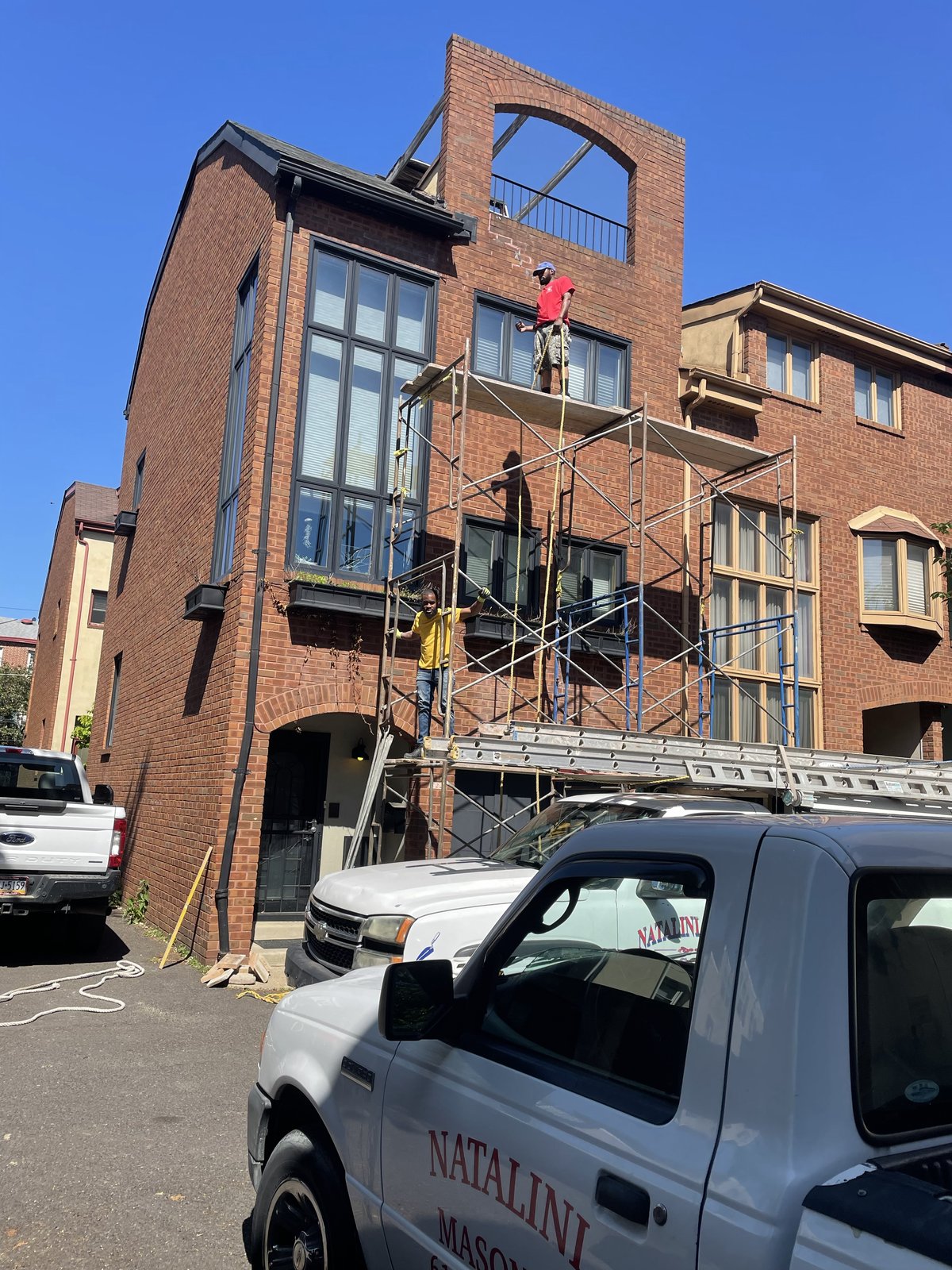
Restoring a historic brick rowhome near Rittenhouse Square means returning the facade to sound, watertight condition while preserving its original 19th-century character. That typically involves careful repointing with matched mortar, replacing spalled or damaged brick with salvaged or color-matched units, repairing failing lintels and cornices, and applying a breathable repellent where needed. Rittenhouse Square’s blocks are among Philadelphia’s most architecturally significant, so the work has to be both structurally correct and visually faithful to the original masonry.
What makes Rittenhouse Square rowhomes special, and demanding
The brick rowhomes around Rittenhouse Square were built largely in the mid-to-late 1800s with soft, hand-made brick and lime mortar. Their value comes from intact original detail: fine joint work, pressed-brick facades, brownstone trim, and decorative cornices. Restoration here is not a tear-off and replace job. The goal is to repair what’s failing while disturbing as little of the original fabric as possible. Done poorly, with the wrong mortar or mismatched brick, a restoration can permanently devalue one of these homes.
Common issues we see on Rittenhouse facades
- Eroded or cracked mortar joints from 150 years of weather
- Spalled and cracked brick faces, especially where past repairs used hard cement
- Rusting steel lintels expanding and cracking the brick over windows
- Failing cornices, parapets, and brownstone trim
- Efflorescence and damp from trapped moisture
How we restore a historic brick facade
- Assess and document. We evaluate the mortar, brick, lintels, and trim, and identify what can be saved versus replaced.
- Repoint with matched mortar. Failed joints are carefully raked out and repointed with mortar matched in strength, color, sand, and profile. On these homes that usually means a lime-rich mix that stays softer than the brick. See our repointing services.
- Repair and replace brick. Spalled units are cut out and replaced with salvaged or matched brick so repairs disappear into the wall. This is the heart of our brickwork.
- Address lintels and trim. Rusting lintels are treated or replaced, and cornices and brownstone details are repaired to shed water properly.
- Protect. Where appropriate, a breathable repellent helps the wall resist water while still drying out.
Why matching matters so much here
On a Rittenhouse Square block, a repair that doesn’t match is worse than no repair at all. Mismatched brick color, the wrong joint profile, or hard gray cement against soft brick all stand out and harm the home’s value and historic integrity. Our crews test the existing mortar, source brick that matches in color and size, and tool joints to the original profile. We specialize in this kind of restoration throughout the neighborhood. If you’re researching the work specifically for your block, see our page on brickwork in Rittenhouse Square, and browse completed restorations in our gallery.
What restoration costs
Every facade is different. Cost depends on wall height and access (scaffold or lift), how much repointing and brick replacement is needed, the condition of lintels and cornices, and the level of detail to be preserved. Spot repairs are modest; a full multi-story facade restoration is a significant investment, but one that protects a far more valuable asset. We never quote sight-unseen. Every job starts with a free on-site estimate.
Protecting your home’s value and character
A restored facade is one of the best investments you can make in a Rittenhouse Square rowhome, both for the structure and for resale. Original masonry that’s been properly maintained signals a well-cared-for home, while a neglected or badly repaired facade scares off buyers and inspectors. Beyond value, there’s the character of the block itself. These streets read as a continuous historic fabric, and a faithful restoration keeps your home in step with its neighbors instead of standing out for the wrong reasons.
Good restoration also pays for itself in avoided damage. Water kept out of the wall doesn’t rot framing, ruin plaster, or feed mold inside the home. The cost of timely repointing and brick repair is a fraction of what water damage costs once it reaches the interior.
Working around an occupied home
Most of our Rittenhouse restorations happen while families are living in the home. We sequence the work, protect entrances and landscaping, and keep the site clean and safe so daily life can continue. On tight Center City blocks that also means coordinating scaffolding, sidewalk protection, and permits responsibly, which is part of being licensed, insured, and experienced in the neighborhood.
Frequently Asked Questions
Can you match the original brick and mortar on my Rittenhouse rowhome?
Yes. We test the existing mortar and source replacement brick that matches in color and size, then tool joints to the original profile so repairs blend into the historic facade rather than standing out.
Do I need historic approval to restore my facade?
It depends on whether your property is in a designated historic district or individually listed. We’re familiar with restoration standards and can advise on what’s typically required during your on-site assessment.
Why is hard cement mortar a problem on these old homes?
Soft historic brick was laid with soft lime mortar so the joints flex and the brick stays protected. Hard cement is stronger than the brick, so movement cracks the brick faces instead. We repoint with a properly matched softer mortar.
How long does a full facade restoration take?
It depends on the height of the wall, access, and how much repointing and brick replacement is needed. Spot repairs may take days; a full multi-story facade takes longer. We give a realistic timeline with your free estimate.
Get a free masonry estimate in Philadelphia
Natalini & Son Masonry has been family-owned and operated since 1974 — 50+ years and 6,000+ projects across Center City and Greater Philadelphia. Every job starts with a free, no-pressure on-site estimate.