Brick Restoration vs. Replacement: Making the Right Call
In most cases, Philadelphia brick can be restored rather than replaced. If the bricks themselves are sound and only the mortar has deteriorated, repointing and cleaning bring the wall back to life at a fraction of replacement cost. Full replacement is only necessary when the brick is structurally failing, badly spalled, or the wall has lost its integrity. The deciding factor is the condition of the brick, not the mortar, and that’s what an on-site inspection determines.
Restoration and Replacement Are Not the Same Thing
People often use these terms interchangeably, but they’re very different jobs. Restoration preserves your original brick and fixes what’s failed around it. Replacement tears out and rebuilds. For a city of historic rowhomes, restoration is usually both the smarter and the more authentic choice, and it keeps the character that makes Philadelphia homes worth owning.
When Restoration Is the Right Call
Most older Philadelphia masonry needs restoration, not replacement. Restoration is the answer when:
- The mortar is failing but the brick is solid. This is the most common scenario. Repointing, grinding out old mortar and packing in fresh, color-matched mortar, restores the wall and stops water intrusion.
- A handful of bricks are cracked or spalled. Individual units can be cut out and replaced without touching the rest of the wall.
- The brick is dirty or stained but intact. Gentle cleaning, never aggressive sandblasting, brings the original color back.
- You want to preserve historic character. Original brick can’t be perfectly replicated, so keeping it is worth doing.
When Replacement Becomes Necessary
Sometimes brick is too far gone to save. Replacement or rebuilding is warranted when:
- The brick is structurally failing, crumbling, deeply spalled, or losing its shape across a large area.
- A wall is bowing, bulging, or cracked through, signaling a structural problem behind the brick.
- Past bad repairs caused damage, such as hard Portland-cement mortar on soft historic brick, which forces the brick to crack as it expands.
- Water damage has compromised the wall beyond what repointing can fix.
Even then, replacement is often partial, rebuilding the failed section while restoring the rest, rather than tearing down a whole wall of good brickwork.
The Mortar Mistake That Causes Replacement
One issue deserves its own mention because it ruins so much Philadelphia brick: using the wrong mortar. Soft historic brick was made to flex with a soft, lime-based mortar. When someone repoints it with hard modern Portland cement, the rigid mortar won’t move, so the softer brick cracks and spalls instead. A repair done with the wrong mortar today can force a replacement a decade from now. Matching the mortar to the brick is the difference between restoration that lasts and restoration that backfires.
What Each Approach Costs
Restoration is almost always the more affordable path. Repointing and spot brick replacement cost far less than tearing out and rebuilding, and they preserve original material. Full or partial replacement costs more because of demolition, new materials, and labor. Because brick condition varies wall by wall, every job starts with a free on-site estimate, and we’ll tell you honestly whether you need restoration or replacement rather than defaulting to the bigger job.
How to Tell What You Have
- Scratch the mortar. If it crumbles or you can dig it out by hand, the joints need repointing.
- Press the brick. Sound brick is firm; flaking or powdery brick is failing.
- Look at the wall’s shape. Bulges, bows, and through-cracks point to structural issues.
- Check for past repairs. Gray, hard mortar on old red brick is a warning sign.
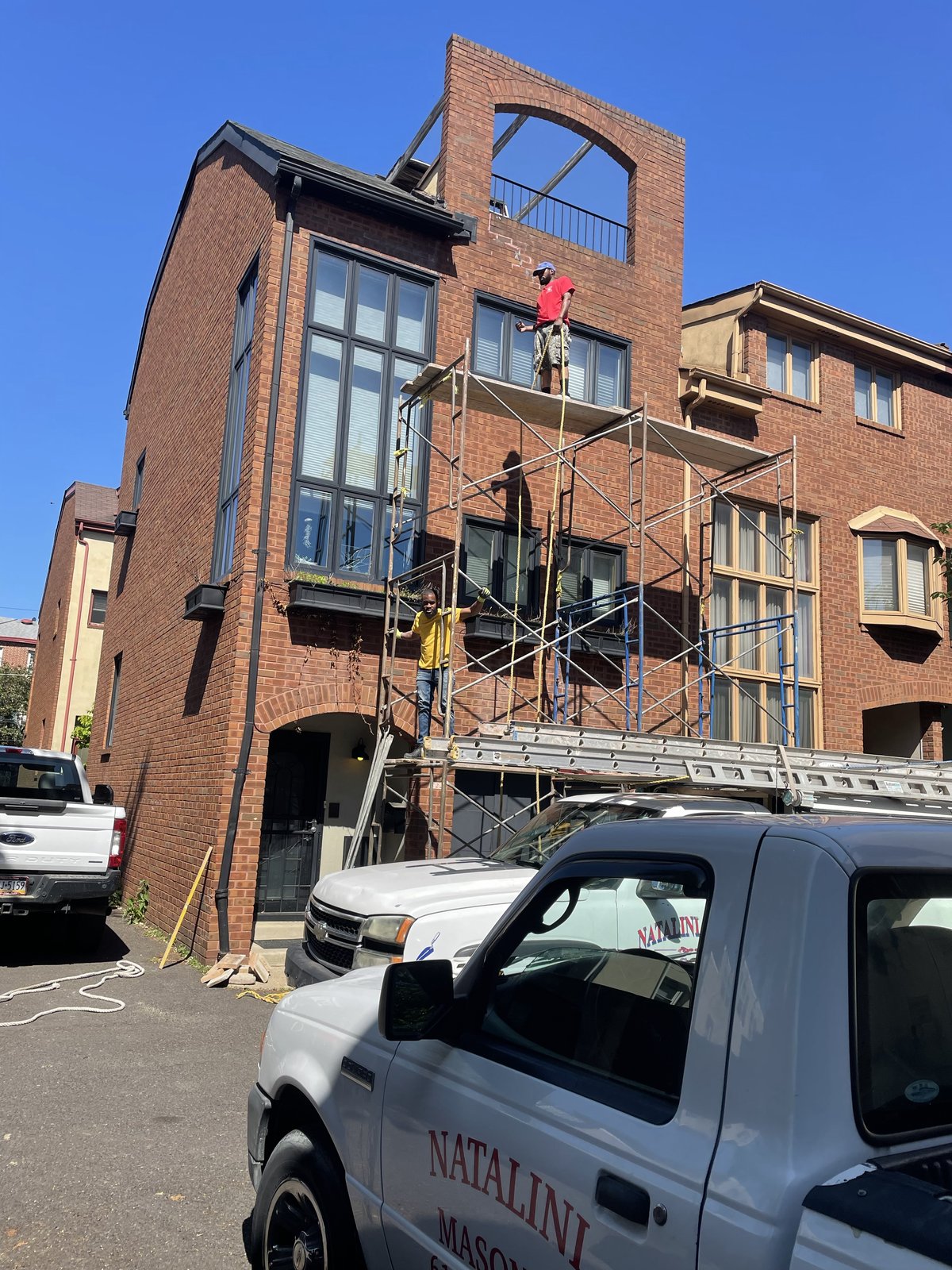
See examples of our restoration work on real Philadelphia homes in our gallery.
Get an Honest Assessment
Frequently Asked Questions
Should I restore or replace my brick?
If the brick is sound and only the mortar has failed, restoration through repointing and spot repair is the right, more affordable choice. Replacement is only necessary when the brick is structurally failing, badly spalled, or the wall has lost integrity.
Is brick restoration cheaper than replacement?
Yes. Repointing and spot brick replacement cost far less than tearing out and rebuilding a wall, and they preserve the original brick. Replacement is more expensive because of demolition, new materials, and added labor.
Can old Philadelphia brick be saved?
In most cases, yes. If the bricks are firm and intact and only the mortar has deteriorated, repointing and gentle cleaning restore the wall. Original historic brick can’t be perfectly replicated, so preserving it is usually worth doing.
Why does the wrong mortar damage brick?
Soft historic brick is made to flex with a soft, lime-based mortar. Hard modern Portland-cement mortar is too rigid, so the softer brick cracks and spalls as it expands and contracts. The wrong mortar can force a full replacement years later.
Get a free masonry estimate in Philadelphia
Natalini & Son Masonry has been family-owned and operated since 1974 — 50+ years and 6,000+ projects across Center City and Greater Philadelphia. Every job starts with a free, no-pressure on-site estimate.