Why Philadelphia Is a Brick City: Rowhomes, Mortar & Time
Philadelphia is called a brick city because more of its housing stock is built from brick than almost any other city in America, the result of cheap local clay, dense rowhome construction, and fire-conscious building laws that go back to the 1680s. Brick is the material that holds the city together literally, in shared party walls, and visually, in the unmistakable red blocks of Fishtown, South Philly, and Center City.
The Rowhome Made Brick King
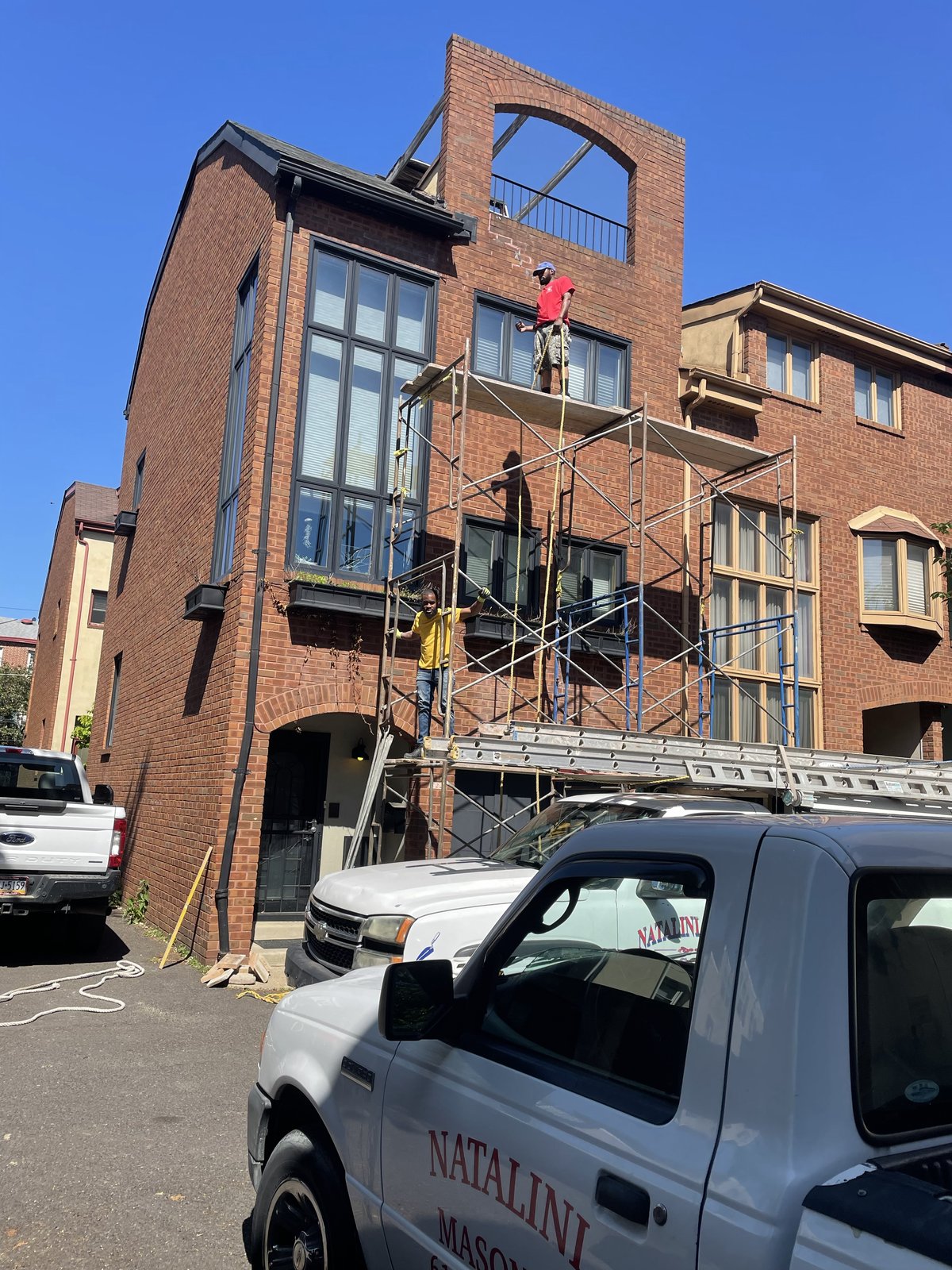
The rowhome is Philadelphia’s signature building, and brick is what made it work. When attached homes share walls, those walls have to be fireproof and load-bearing. Brick does both. Builders could raise an entire block at once, each home leaning on its neighbor, all of it wrapped in durable masonry that didn’t burn.
That efficiency is why the city filled in so densely during the 1800s, and why those blocks are still standing. A well-built brick party wall doesn’t wear out. It just needs its mortar maintained.
What Makes a Brick Wall Last
- Mass. Historic walls are often three or four wythes (layers) of brick thick, which carries load and resists weather.
- Breathable mortar. Original lime mortar lets moisture escape instead of trapping it, protecting the brick.
- Good bonding. Patterns like Flemish and common bond tie the layers together so the wall acts as one unit.
Mortar Is the Weak Point, Not the Brick
Here’s the thing most homeowners get backwards: the brick almost never fails first. The mortar does. Lime mortar is soft on purpose so the wall can flex, but that softness means it slowly erodes from rain, wind, and freeze-thaw cycles. Once joints recede past a certain depth, water gets behind the face and the trouble starts.
That’s why repointing is the defining maintenance job in a brick city. Done correctly with a mortar that matches the original, it resets the clock on a wall for decades. Done wrong with hard modern cement, it can actually damage the brick. The difference comes down to the mason’s experience.
Brick and the Philadelphia Climate
Philadelphia’s winters swing across the freezing point dozens of times a year. Water seeps into masonry, freezes, expands, and pries the wall apart a little at a time. Brick handles this well when it’s sealed and pointed; it fails fast when it’s not. The same logic applies to chimneys, which sit fully exposed on the roof and take the worst of the weather.
Keeping a Brick City Standing
The reason Philadelphia still looks like Philadelphia is that generations of masons have kept its walls maintained. We’ve worked on more than 6,000 projects across the region, and the work that protects these homes is rarely glamorous. It’s solid brickwork, careful pointing, and keeping water where it belongs. You can see the results in our gallery.
Frequently Asked Questions
Why does Philadelphia have so many brick buildings?
Cheap local clay, fire-prevention building customs dating to William Penn, and the dense rowhome style all pushed the city toward brick. Shared party walls between attached homes needed to be fireproof and load-bearing, and brick did both, so the city grew in brick for centuries.
What part of a brick wall usually fails first?
The mortar, not the brick. Lime mortar is intentionally soft and slowly erodes from rain and freeze-thaw cycles. Once the joints recede too far, water gets behind the brick face, which is why repointing is the most important maintenance task.
How does winter weather affect Philadelphia brick?
Freeze-thaw cycles are the main threat. Water enters the masonry, freezes, expands, and gradually pries it apart. Well-pointed, sealed brick handles this fine, but neglected joints let the damage accelerate quickly.
Get a free masonry estimate in Philadelphia
Natalini & Son Masonry has been family-owned and operated since 1974 — 50+ years and 6,000+ projects across Center City and Greater Philadelphia. Every job starts with a free, no-pressure on-site estimate.