A Short History of Brick Masonry in Philadelphia
Brick has been Philadelphia’s primary building material since the 1680s, when colonists discovered the region’s red clay was ideal for firing durable, weather-resistant brick. The city grew block by block in brick because the raw material was local, the supply was endless, and the results lasted generations. That same clay and craft tradition still shapes the rowhomes, churches, and warehouses standing across Center City and the surrounding neighborhoods today.
Why Philadelphia Built in Brick From the Start
When William Penn laid out Philadelphia in 1682, he wanted a “greene country towne” that would resist fire after the catastrophic blazes that destroyed wooden London. Brick answered both needs. The clay deposits along the Delaware and Schuylkill rivers fired into a hard, deep-red brick, and small kilns sprang up to feed the building boom.
By the early 1700s, brick had become the default for anything meant to last. Homes, meetinghouses, and commercial buildings all rose in the same warm tone you still see walking through Old City and Society Hill.
The Materials That Made It Possible
- Local red clay rich in iron, which gave the brick its signature color after firing.
- Lime mortar burned from oyster shells and limestone, softer than modern cement and able to flex with the wall.
- Skilled bricklayers who arrived from England and passed the trade down through families, much the way it still moves today.
The Rowhome Era
The 19th century is when brick truly defined Philadelphia. As the population exploded, builders put up entire blocks of attached rowhomes, sharing party walls to save material and heat. Brick made this efficient and fireproof. Whole neighborhoods, including Fishtown, Northern Liberties, and South Philadelphia, were built this way, which is why the city still has more surviving historic brick housing than almost anywhere in America.
These walls were typically laid three or four bricks thick, with the outer course showing decorative bonds like Flemish or common bond. That mass is part of why so many of these homes are still standing 150 years later. Good brickwork done right simply outlasts most of what’s built around it.
How the Old Walls Survive Today
The brick itself rarely fails. What ages is the mortar between the bricks. Original lime mortar is soft by design, and a century of Philadelphia weather slowly wears it back. That’s why repointing the careful removal and replacement of failing mortar joints is the single most important maintenance task for any historic brick building in the city.
Modern owners who want their masonry to last another 100 years follow the same logic the colonial builders did: match the material to the wall, respect the way it was made, and keep water out. You can see examples of restored historic brickwork in our gallery.
A Living Tradition
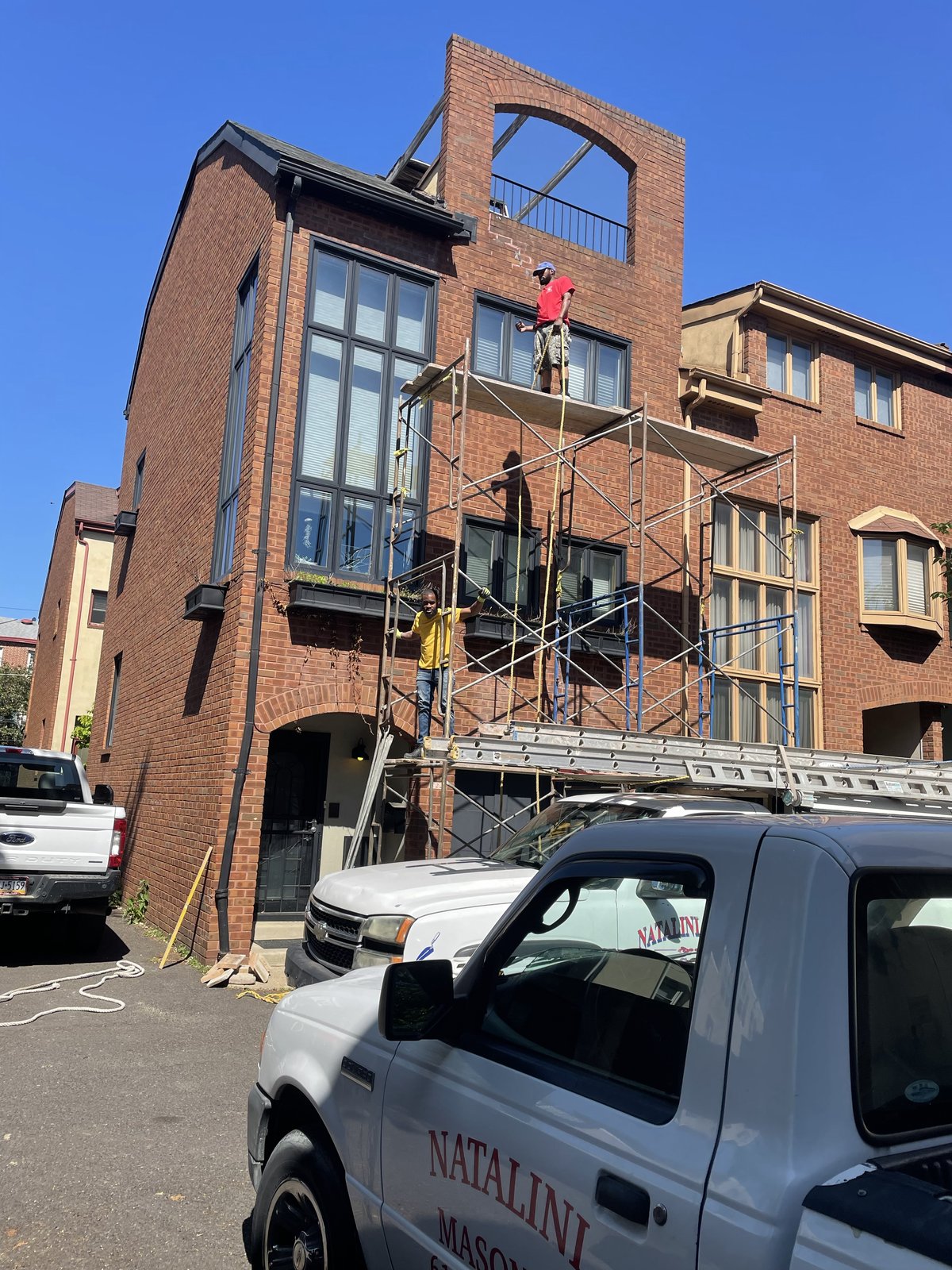
Philadelphia’s brick history isn’t just in museums. It’s in the wall of nearly every block in the older neighborhoods, and it’s maintained by masons who learned the craft the same way the trade has always passed along, from one generation to the next. We’ve spent more than 50 years working on these walls, and the fundamentals haven’t changed much since Penn’s day.
Frequently Asked Questions
Why are so many Philadelphia buildings made of brick?
Philadelphia sits on rich red clay deposits that fire into hard, durable brick. After fires destroyed wooden cities, William Penn encouraged brick construction in the 1680s, and local kilns made it cheap and abundant, so the city grew in brick for the next 300 years.
How old are Philadelphia’s brick rowhomes?
Most of the city’s surviving brick rowhomes date from the 1800s through the early 1900s, with some Old City and Society Hill buildings reaching back to the 1700s. Many are still structurally sound today because brick and lime mortar age slowly when maintained.
Does old Philadelphia brick still hold up?
Yes. The brick itself rarely fails. What wears down is the mortar between the bricks. Repointing failing joints every few decades keeps historic brick walls standing and weather-tight for another century.
Get a free masonry estimate in Philadelphia
Natalini & Son Masonry has been family-owned and operated since 1974 — 50+ years and 6,000+ projects across Center City and Greater Philadelphia. Every job starts with a free, no-pressure on-site estimate.