Brick Steps & Stoops: Repair and Restoration in Philadelphia
Brick steps and stoops in Philadelphia usually fail from the same culprits: water getting into failing mortar joints, freeze-thaw cycles, and a settling or eroded base. Catch it early and a repoint or a few replaced bricks restores the stoop. Let it go and you’re rebuilding the whole structure. The right fix depends on whether the damage is cosmetic or structural, which a quick on-site look will tell you.
Why Philadelphia Stoops Take a Beating
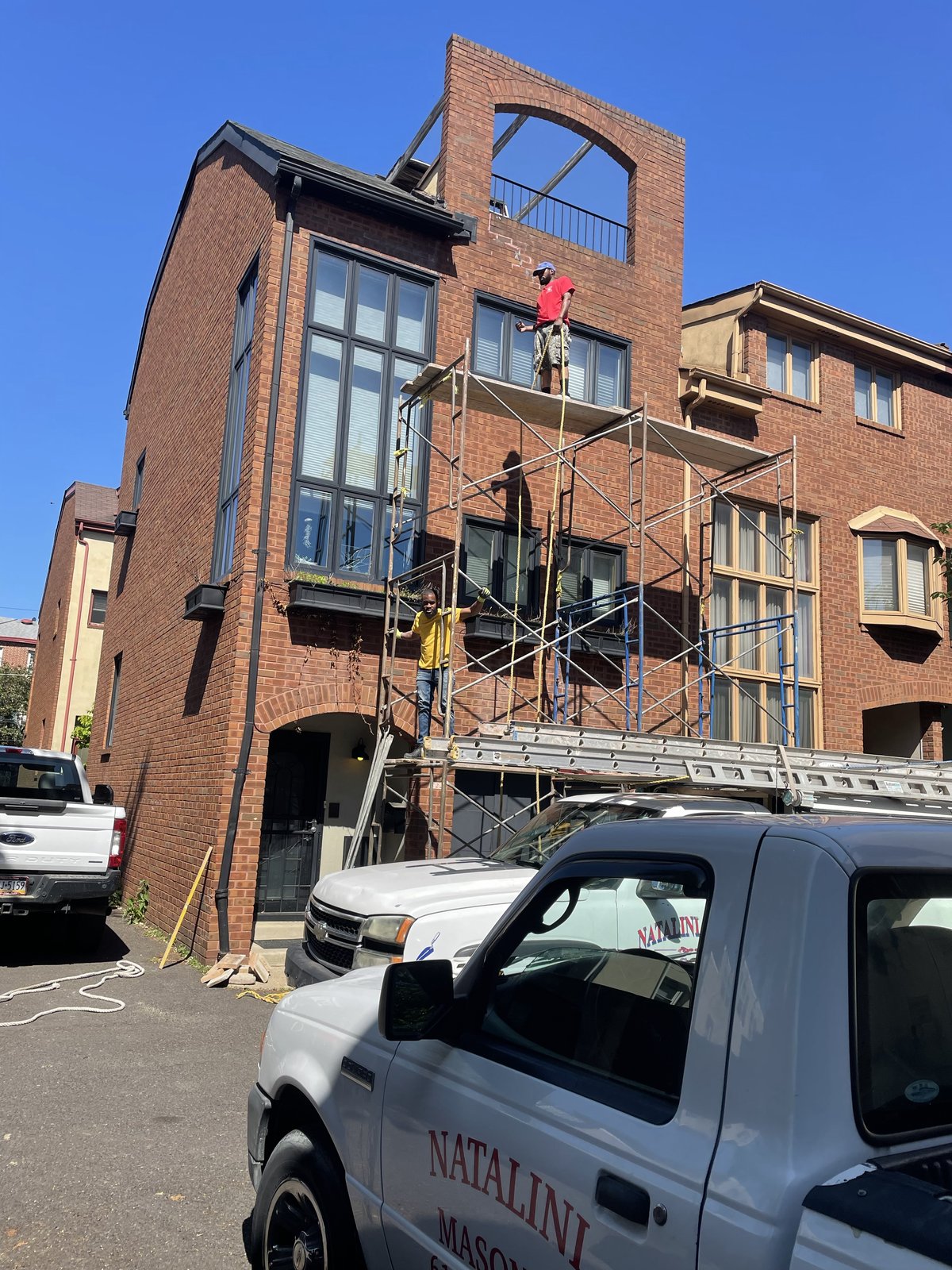
The classic Philadelphia stoop sits right where weather hits hardest: at grade, exposed to rain, splashed with de-icing salt all winter, and cycled through freeze and thaw dozens of times a year. Over decades, the mortar that holds it together breaks down, water works into the joints, and the whole structure starts to loosen. Rowhomes in Fairmount, Spring Garden, and Washington Square West are full of stoops that have done this dance for a century.
How to Spot the Damage
Walk your steps and look for these signs:
- Crumbling or missing mortar between bricks, or joints you can scratch out with a key.
- Loose, wobbly, or shifted bricks, especially on the treads and nosing.
- Cracks running through the structure rather than just surface chips.
- Spalling, where the brick face flakes or pops off, a sign water got in and froze.
- Steps that have settled or tilted, pointing to a base or drainage problem.
- White, chalky residue (efflorescence), a clue that water is moving through the masonry.
Repair vs. Rebuild: Making the Call
When Repointing or Spot Repair Is Enough
If the bricks are sound but the mortar has failed, repointing, grinding out the old joints and packing in fresh, color-matched mortar, restores the stoop and stops water from getting deeper. Individual cracked or spalled bricks can be cut out and replaced. This is the most common and most affordable fix, and it’s the right one when the structure underneath is still solid.
When You Need to Rebuild
If steps have settled, the base has eroded, or the structure is cracked through and unstable, patching only buys a little time. A full or partial rebuild addresses the foundation, sets a proper base, and lays new brickwork that will last another generation. It costs more, but it’s the honest fix when the damage is structural.
Matching Historic Brick and Mortar
On older Philadelphia homes, the right repair is one you can’t see. That means sourcing brick that matches the size, color, and texture of the original, and using the correct mortar. This last point matters: soft historic brick needs a softer lime-based mortar. Modern hard Portland-cement mortar is too rigid and will actually damage old brick as it expands and contracts. Knowing the difference is what separates a restoration that lasts from one that causes new problems.
What Step and Stoop Repairs Cost
- Repointing and minor brick replacement: the most affordable, often a few hundred to a couple thousand dollars depending on the area.
- Partial rebuild: mid-range, when treads or a section need to come apart.
- Full rebuild with new base: the largest investment, but a permanent fix.
Because no two stoops are the same, every job starts with a free on-site estimate. We’ll tell you honestly whether you need a repoint or a rebuild rather than upselling you into work you don’t need.
Protect Your Stoop Going Forward
Once repaired, keep water out: address drainage so runoff doesn’t pool at the base, repoint joints before they crumble, and go easy on de-icing salt, which accelerates spalling. A little upkeep keeps a restored stoop solid for decades. See our finished step and stoop work in the gallery.
Get Your Steps Looked At
Frequently Asked Questions
Should I repair or rebuild my brick steps?
If the bricks are sound and only the mortar has failed, repointing and spot brick replacement will restore the steps affordably. If the base has eroded, the steps have settled, or the structure is cracked through, a partial or full rebuild is the lasting fix.
Why are my brick steps crumbling?
The usual cause is water. Failing mortar lets moisture into the joints, and freeze-thaw cycles plus de-icing salt break the brick down over time. A settling or eroded base also loosens the structure. An on-site look will pinpoint which it is.
Can old historic brick be matched?
Yes. A skilled mason sources brick matching the original size, color, and texture and uses the correct mortar. Soft historic brick needs a softer lime-based mortar, not hard modern Portland cement, which can damage old brick over time.
How much does it cost to fix brick stoop steps in Philadelphia?
Repointing and minor brick replacement is the most affordable option, while a full rebuild with a new base costs more but lasts longest. Because every stoop is different, the work starts with a free on-site estimate.
Get a free masonry estimate in Philadelphia
Natalini & Son Masonry has been family-owned and operated since 1974 — 50+ years and 6,000+ projects across Center City and Greater Philadelphia. Every job starts with a free, no-pressure on-site estimate.