Stone vs. Block Retaining Walls for Philadelphia Yards
For most Philadelphia yards, segmental concrete block is the more affordable, faster, and highly engineered option, while natural stone is the more beautiful and timeless one that costs more. Block excels on taller structural walls and tight budgets; stone shines on lower garden walls and historic properties where looks matter most. Both last for decades when built with proper footings and drainage. The right call depends on your slope, your budget, and the look you’re after.
The Short Answer
Choose block if you want maximum structural strength per dollar, a faster build, and a clean modern look. Choose natural stone if you want the most attractive, long-lasting wall that complements historic Philadelphia architecture and you have the budget for it. Either way, a retaining wall only performs if the footing and drainage are done right.
Segmental Concrete Block Walls
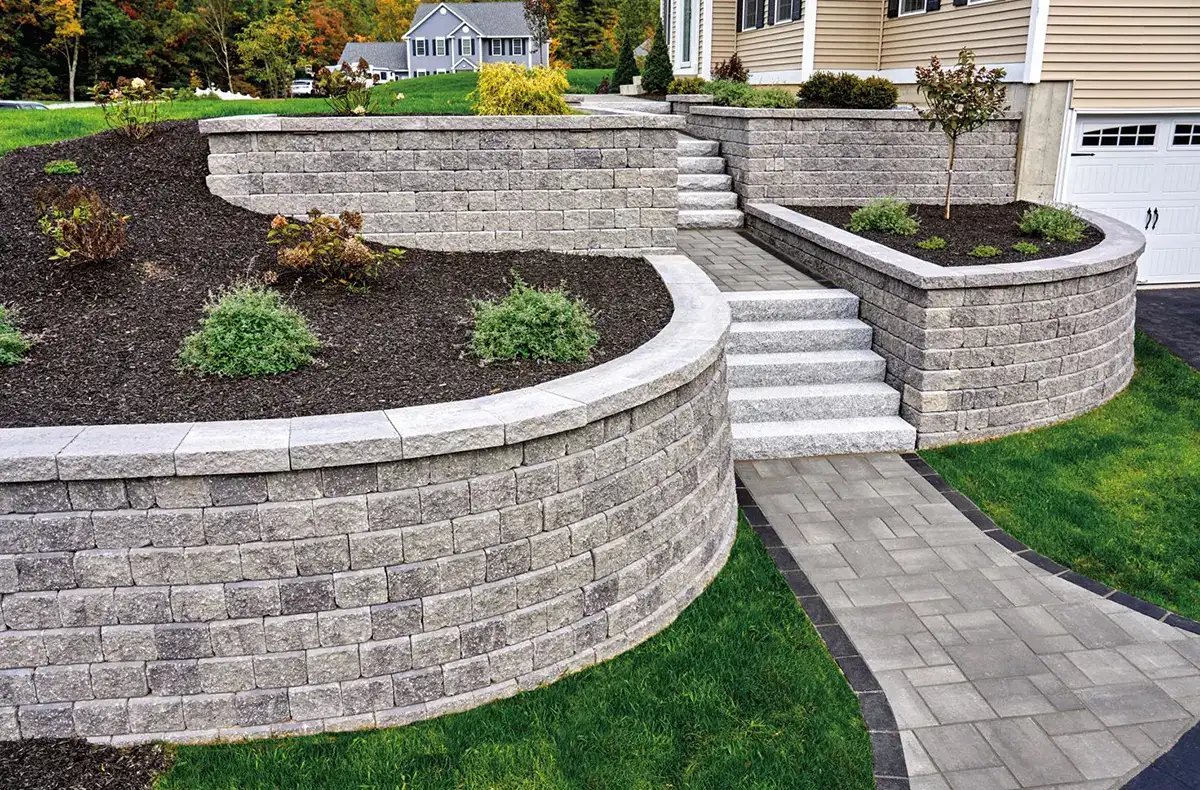
Modern segmental retaining wall (SRW) block is an engineered system of interlocking units, often with a built-in setback and geogrid reinforcement for taller walls. It’s the workhorse of the industry.
Advantages of Block
- Cost-effective: generally the lowest installed price per face foot.
- Engineered strength: designed systems handle tall walls and heavy loads predictably.
- Faster installation: uniform units go up quicker, saving labor.
- Consistent look: available in colors and textures, including stone-look faces.
Trade-offs
Even the best block reads as manufactured up close, and lower-grade block can look plain. It won’t carry the character of real stone on a historic block in Society Hill or Chestnut Hill.
Natural Stone Walls
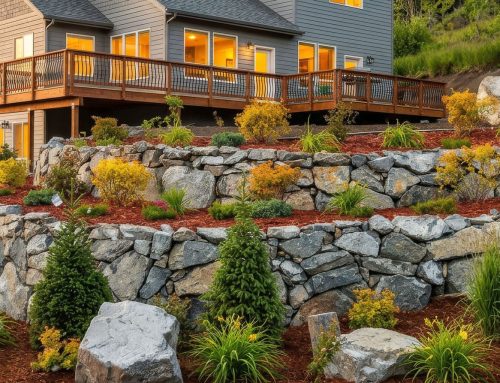
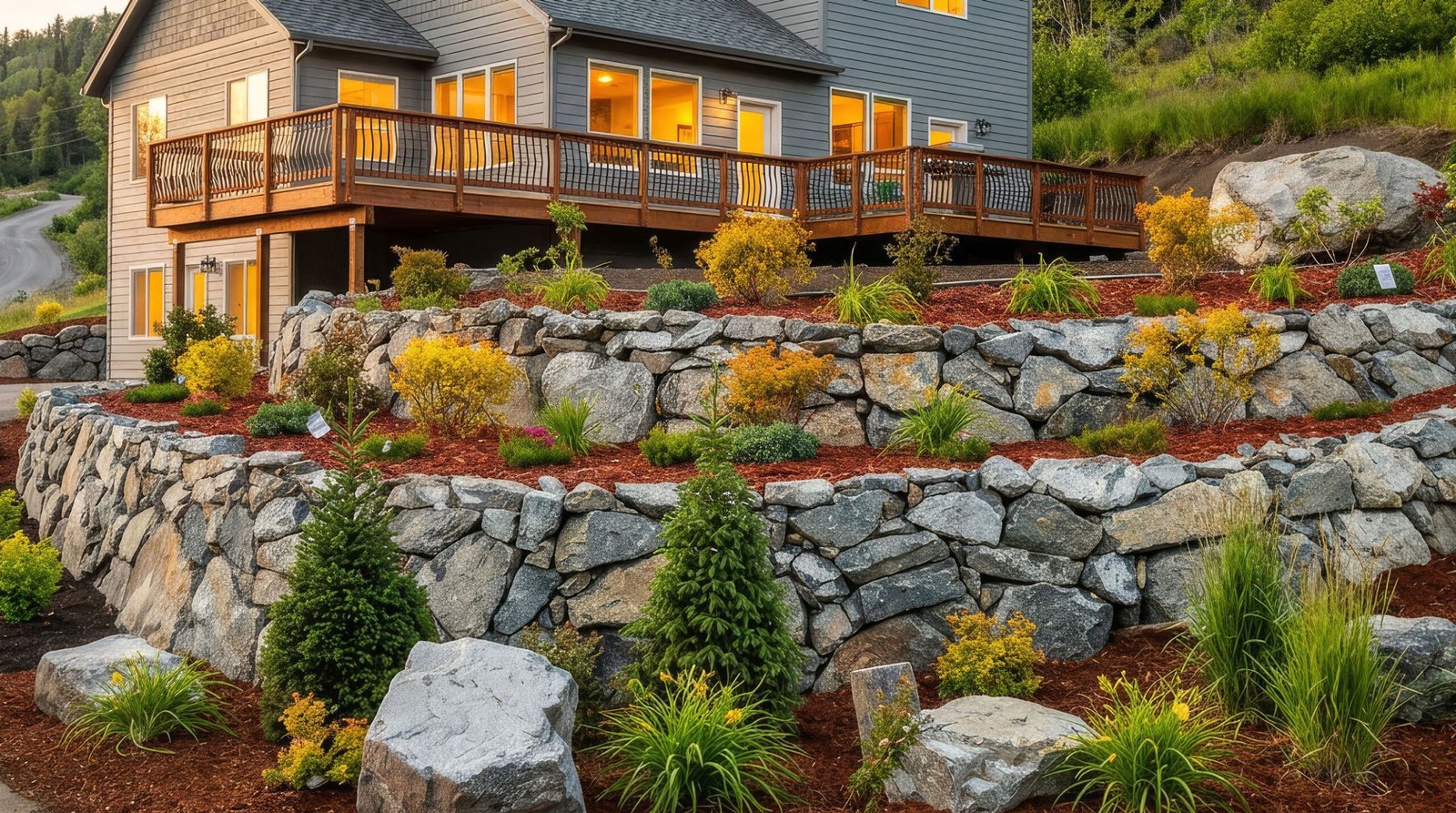
A natural stone wall, whether dry-laid or mortared, is a craft product. No two are identical, and a well-built one looks like it belongs in the Pennsylvania landscape because it does.
Advantages of Stone
- Timeless beauty: nothing matches the texture and color depth of real stone.
- Character and value: a stone wall is a feature that adds curb appeal and resale value.
- Architectural fit: ideal for older homes, gardens, and the leafy yards of the Main Line and Delaware County.
- Longevity: a properly built stone wall can last generations.
Trade-offs
Stone costs more in both material and skilled labor, and it takes longer to build. For very tall structural walls, stone is often used as a veneer over a poured or block core to combine strength with looks.
Cost Comparison
In the Philadelphia area, block retaining walls generally run toward the lower end of the $40 to $90 per square face foot range, while natural stone sits at the upper end and beyond for intricate work. Height, drainage, and site access in tight city lots all move the number. Every wall starts with a free on-site estimate so you’re comparing real figures for your property.
Which Should You Choose?
- Tall structural wall on a budget? Block, often with a stone-look face.
- Lower garden or seat wall where looks lead? Natural stone, or stone tying into brickwork or a patio.
- Want strength and beauty? A poured or block core with a stone veneer.
- Historic property? Stone almost always wins for fit and value.
Browse our gallery to compare finished stone and block walls on real Philadelphia homes.
Get an Honest Recommendation
Frequently Asked Questions
Is a stone or block retaining wall better?
Block is more affordable, faster to build, and excellent for tall structural walls. Natural stone is more beautiful and timeless and suits historic properties and garden walls. Both last for decades with proper footings and drainage; the best choice depends on budget and looks.
Which retaining wall is cheaper, stone or block?
Block is the more affordable option, typically toward the lower end of the $40 to $90 per square face foot range. Natural stone costs more in both material and skilled labor and sits at the upper end.
Can you get the look of stone with a cheaper block wall?
Yes. Many segmental block units come with stone-look textures and colors, and you can also build a block or poured-concrete core faced with a real stone veneer to get strength and the stone appearance together.
Which retaining wall lasts longer?
Both stone and block walls can last for decades, and a well-built natural stone wall can last generations. Longevity depends far more on a proper footing below the frost line and good drainage than on the material itself.
Get a free masonry estimate in Philadelphia
Natalini & Son Masonry has been family-owned and operated since 1974 — 50+ years and 6,000+ projects across Center City and Greater Philadelphia. Every job starts with a free, no-pressure on-site estimate.