
Preventing Water Damage to Your Brick Rowhome
The most effective way to prevent water damage to a brick rowhome is to keep water from getting behind the brick in the first place, which means maintaining mortar joints, chimneys, flashing, and drainage before they fail. Water is the number-one cause of masonry damage in Philadelphia. Brick and mortar are porous, and once moisture gets inside the wall and freezes, it cracks the masonry from within. Stay ahead of it and a rowhome wall can last another century. Ignore it and small leaks turn into structural repairs.
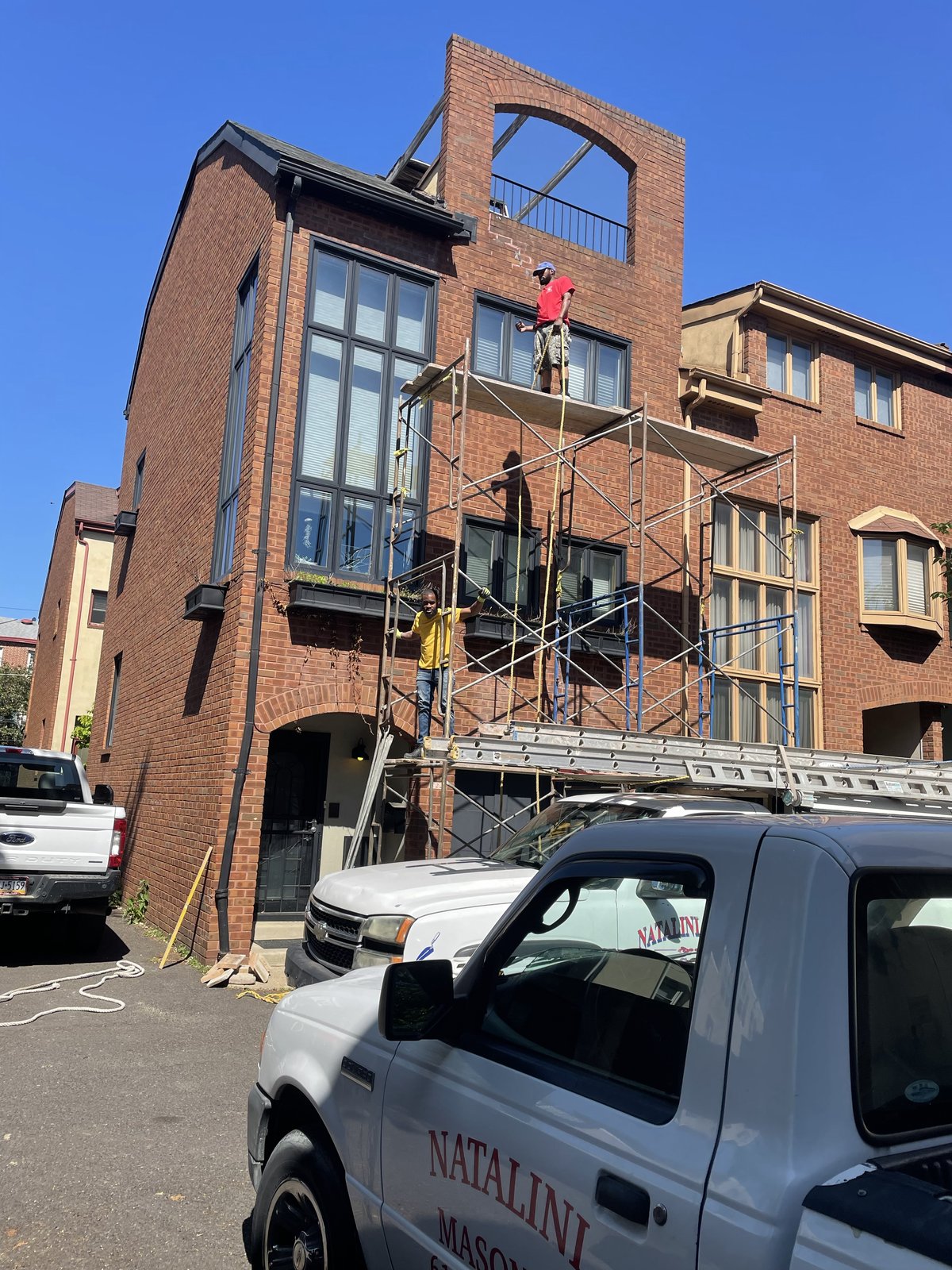
How Water Gets Into a Brick Wall
Brick walls aren’t supposed to be perfectly waterproof, they’re designed to absorb a little moisture and let it breathe back out. Problems start when water gets in faster than it can escape, or when it gets trapped. The usual entry points are:
- Failing mortar joints the most common culprit by far.
- Cracked or open chimney crowns and joints.
- Failed flashing where the roof meets walls and chimneys.
- Clogged or broken gutters and downspouts dumping water against the wall.
- Poor grading that lets ground water pool at the foundation.
- Cracked or worn sills and caps over windows and parapets.
Mortar: Your First Line of Defense
Mortar joints are where most water enters a rowhome. As the joints erode over decades, they recede and open small channels straight into the wall. Repointing, cutting out the failed mortar and packing in a fresh, compatible mix, seals those channels and is the single most important thing you can do to keep water out. The key is using a mortar that matches the original; hard cement on soft historic brick traps moisture and makes spalling worse instead of better.
Signs Your Mortar Is Letting Water In
- Joints that look sandy, cracked, or hollowed out.
- White efflorescence staining on the brick face.
- Damp or musty interior walls.
- Brick faces flaking or popping (spalling).
Don’t Forget the Chimney
The chimney is the most exposed masonry on the house and a frequent source of hidden leaks. Water enters through a cracked crown, open joints, or failed flashing, then runs down inside the wall where you may not see it until there’s a stain on a ceiling. A sound crown, tight joints, and good flashing keep the chimney from quietly soaking your home. If you’re seeing interior water stains near a chimney, that’s usually where to look first.
Manage the Water Around the House, Too
Not all water damage comes through the wall face. A lot of it comes from the ground and the roofline:
- Keep gutters clean and downspouts extended so roof water lands away from the wall, not against it.
- Check grading the ground should slope away from the foundation, not toward it.
- Maintain sealants and caulking around windows and doors.
- Repair cracked concrete aprons and steps that channel water toward the house; sound concrete work directs runoff away.
A Simple Prevention Routine
Twice a year, walk your rowhome and look for the warning signs above. Catching a sandy joint or a hairline crack early means a quick repair instead of a wall rebuild. The homes that suffer serious water damage are almost always the ones where small issues went unaddressed for years. We’ve kept rowhomes across South Philly, Fishtown, and Center City watertight for more than 50 years; examples are in our gallery.
Frequently Asked Questions
How does water get into a brick rowhome?
Most often through failing mortar joints, but also through cracked chimney crowns, failed flashing, clogged gutters, poor grading, and worn window sills. Brick is porous by design, so trouble starts when water gets in faster than it can dry out, or gets trapped behind the face.
What’s the best way to prevent water damage to brick?
Keep water out before it enters. Repoint failing mortar joints, maintain the chimney crown and flashing, keep gutters clean and downspouts extended, and make sure the ground slopes away from the foundation. Catching small issues early prevents structural repairs later.
How can I tell if my mortar is letting water in?
Look for sandy, cracked, or hollowed-out joints, white efflorescence staining on the brick, flaking or popping brick faces, and damp or musty interior walls. Any of these means water is getting into the wall and the joints likely need repointing.
Why do interior ceiling stains often point to the chimney?
The chimney is the most exposed masonry on the house. Water entering through a cracked crown, open joints, or bad flashing runs down inside the wall and can surface as a ceiling stain far from the actual entry point, so chimneys are a common first place to investigate leaks.
Get a free masonry estimate in Philadelphia
Natalini & Son Masonry has been family-owned and operated since 1974 — 50+ years and 6,000+ projects across Center City and Greater Philadelphia. Every job starts with a free, no-pressure on-site estimate.