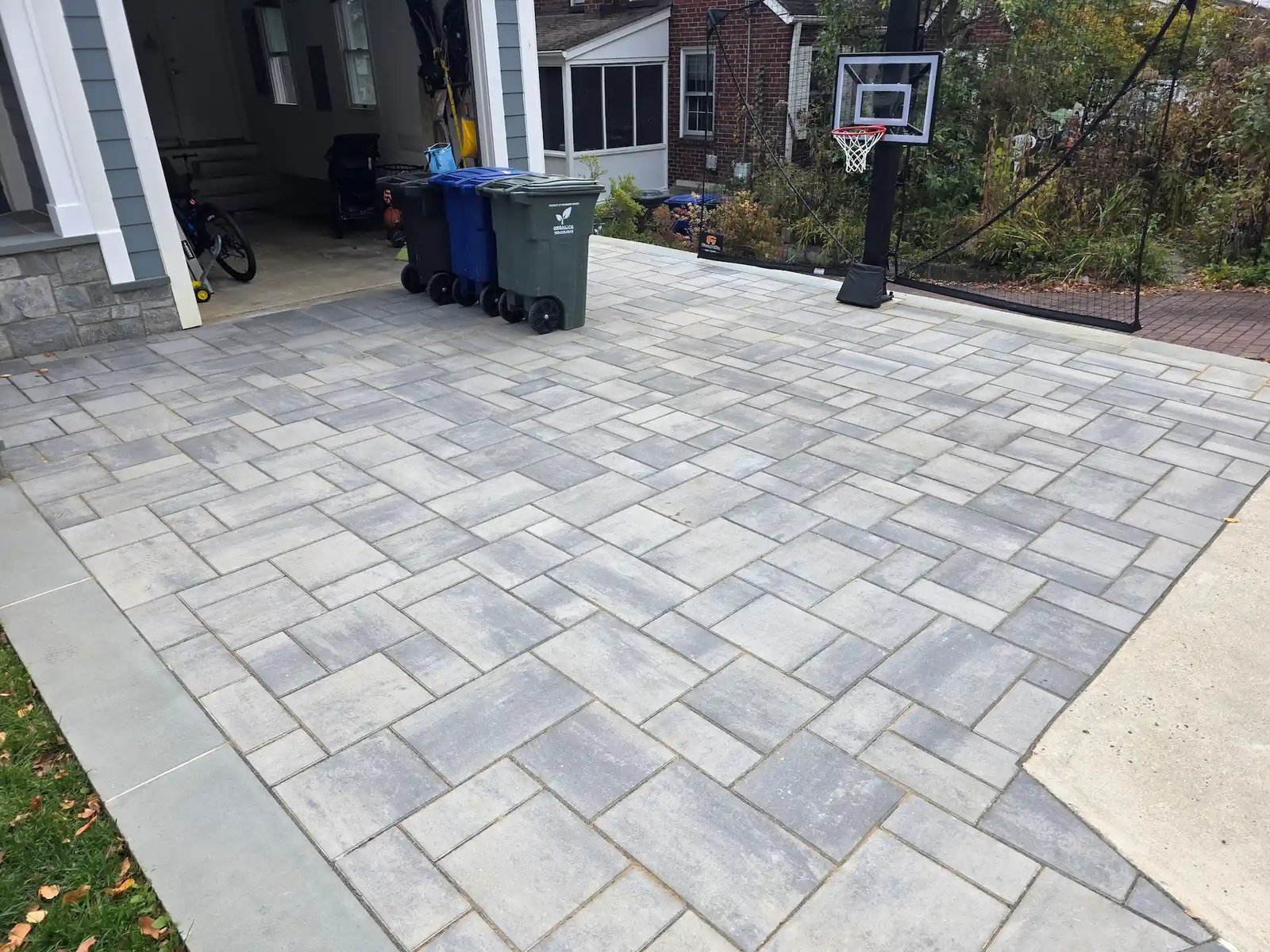
Choosing Pavers for a Philadelphia Pool Deck
The best pavers for a Philadelphia pool deck are dense, slip-resistant, and rated to survive freeze-thaw cycles, typically concrete pavers, porcelain pavers, or travertine. A pool deck takes constant water, bare feet, and harsh winters, so the material and the installation both have to be chosen for those conditions. Get those two things right and you’ll have a deck that stays safe, cool underfoot, and crack-free for decades.
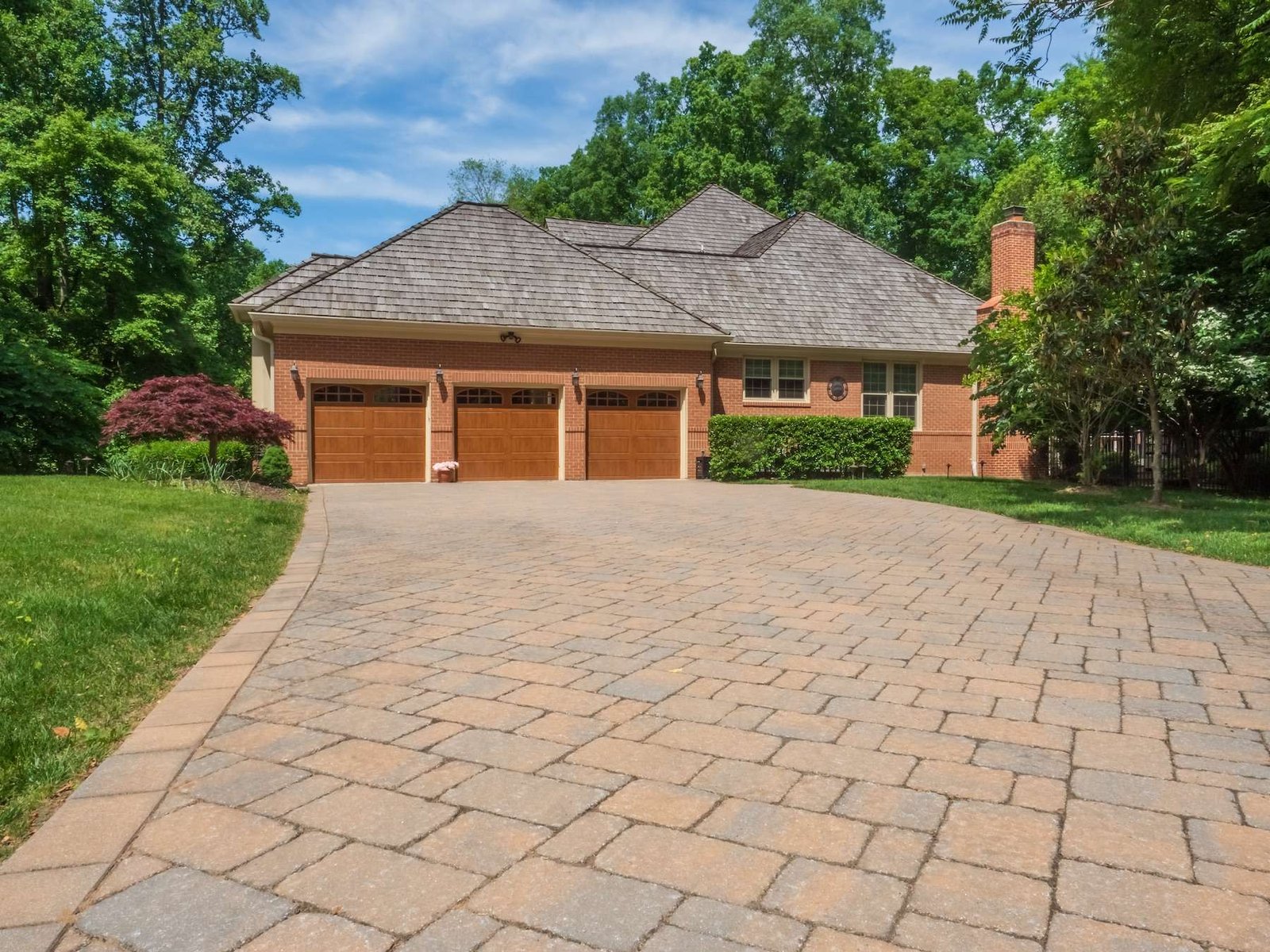
What a Pool Deck Actually Has to Handle
A pool deck is one of the most demanding surfaces around a home. It needs to be:
- Slip-resistant when wet, because it’s wet constantly.
- Cool underfoot for bare feet in summer sun.
- Freeze-thaw durable to survive Philadelphia winters without spalling.
- Easy to repair since pool areas see heavy use and the occasional dropped object.
- Drainage-friendly so water moves away from the pool and the house.
That combination is exactly why pavers tend to outperform a single poured slab around pools, individual units flex with the ground and can be lifted and reset if needed.
The Best Paver Materials for Philadelphia Pools
Concrete Pavers
The most popular and versatile choice. Concrete pavers come in countless shapes, colors, and textures, including tumbled finishes that add grip. They’re durable, freeze-thaw rated, budget-friendly, and any single damaged unit can be swapped out. A strong all-around pick for most backyards.
Porcelain Pavers
A premium modern option. Porcelain is extremely dense, so it absorbs almost no water, resists stains and fading, and handles freeze-thaw beautifully. Textured porcelain offers excellent slip resistance and stays cooler than many materials. It costs more but needs very little maintenance.
Travertine
A natural stone prized for pool decks because it stays remarkably cool underfoot and is naturally slip-resistant. Travertine gives an upscale, Mediterranean look. It does need sealing to handle our freeze-thaw winters, but when maintained it’s a beautiful, comfortable surface.
Layout and Design Choices
Beyond material, the layout sets the look and the comfort:
- Coping first. The coping is the capped edge around the pool, choose a bullnose or rounded edge that’s comfortable and safe to grab.
- Border banding. A contrasting border defines the deck and frames the pool.
- Pattern. Running bond and herringbone are durable, classic, and interlock well for stability.
- Flow to the yard. Carry the paver style into adjoining patios and walkways so the whole backyard connects.
Why Installation Decides Everything
The material matters, but in Philadelphia the installation matters more. A pool deck that’s going to last needs:
- A properly compacted base of crushed stone so the deck doesn’t settle or heave.
- Correct grading that pitches water away from the pool and the foundation.
- A clean bedding layer and edge restraints to keep pavers locked in place.
- Polymeric sand in the joints to resist weeds, washout, and shifting.
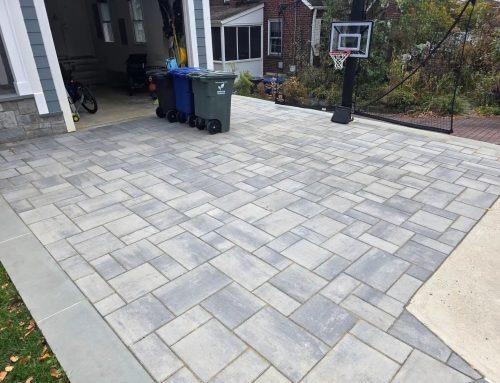
Skip the base work and even premium pavers will sink and tilt after a few freeze-thaw winters. We build paver decks and patios to handle our climate from the ground up, and you can see finished outdoor work in our gallery.
Planning Your Pool Deck
Cost depends on the paver material, the size of the deck, coping, and how much base and drainage work the site needs, so there’s no honest flat price. Every job starts with a free on-site estimate where we look at your pool, your yard, and your drainage before recommending anything.
Frequently Asked Questions
What are the best pavers for a pool deck in Philadelphia?
Concrete pavers, porcelain pavers, and travertine all work well. They’re slip-resistant, freeze-thaw durable, and (for porcelain and travertine) stay cool underfoot. The right choice depends on your budget, look, and maintenance preference.
Are pavers better than poured concrete around a pool?
For pools, pavers often perform better because individual units flex with the ground, resist cracking, and can be lifted and reset if they settle. A single poured slab is more prone to cracking and harder to repair invisibly.
Will pool deck pavers crack in winter?
Quality freeze-thaw-rated pavers won’t crack if the installation is done right, with a compacted crushed-stone base, proper grading, edge restraints, and polymeric joint sand. Poor base prep, not the pavers themselves, is what causes settling and heaving over winters.
Which pavers stay coolest underfoot?
Travertine and textured porcelain tend to stay coolest, which makes them popular for summer pool use. Lighter colors in any material also reflect more heat and feel cooler than dark surfaces.
Get a free masonry estimate in Philadelphia
Natalini & Son Masonry has been family-owned and operated since 1974 — 50+ years and 6,000+ projects across Center City and Greater Philadelphia. Every job starts with a free, no-pressure on-site estimate.